
Communicating Openly

When and How to Discuss Exclusivity in Dating

When and How to Discuss Exclusivity in Dating

These days dating seems more complicated than before. As I got more familiar with contemporary dating, it was clear that the initial phase of getting to know someone was interesting, but a bit puzzling. Spending time together, holding conversations, building connection but then comes an unsaid question deep within one's mind of where it could all be headed. Eventually that uncertainty matures into curiosity, and curiosity may finally develop into the demand for understanding. And this is where the chat around exclusivity starts. I once thought that exclusivity just happened naturally and wouldn't need a word. However after a while I realized that our assumptions are very likely to be wrong when both people do not have the same view.

Talking about exclusivity may present itself as intimidating because it brings out vulnerability. It entails being honest regarding what we desire, how we feel, and the direction which we wish the relation might take. In the beginning of my dating experiences I had a tendency to evade such talks because I had fears that talking about it would create tension or frighten off the individual involved. As a result of gaining some level of experience I came to realize that having clarity really signifies high degree of emotional maturity. Open conversation concerning exclusivity facilitates the mutual comprehension among the two individuals regarding their specific expectations and plans. The moment you communicate about these matters such way leaves room for growth of natural trust and regard.

Identifying and Addressing Emotional Triggers in Relationships

Identifying and Addressing Emotional Triggers in Relationships

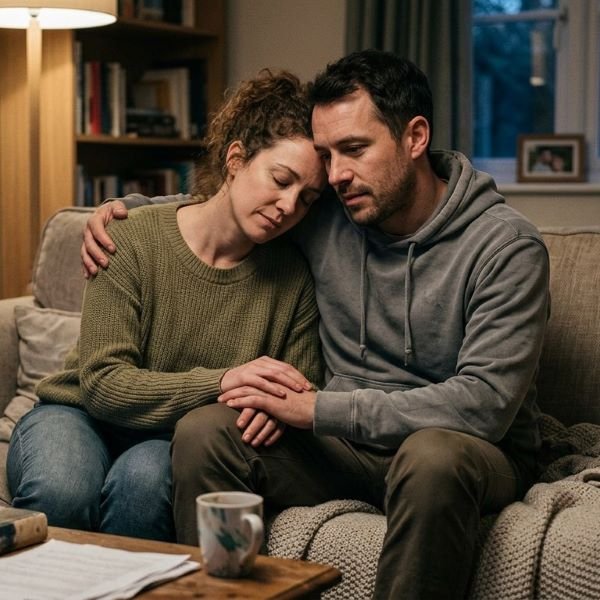
In all relationships I was ever involved in, there were some point of time in conversations where we went off on a tangent, unexpectedly having a very intense chat. A slight thing such as an uttered comment, a certain tone of voice, or misinterpretation of meaning would evoke a strong emotional response. Initially I considered those reactions to be merely arguments or one side being in a bad mood. Nevertheless, with time, I started realizing that most of these events were linked with something profound. These were really emotional triggers, sensitive areas tied to some of our past experiences, fears, and insecurities that could emerge very quickly in a relationship. Upon getting hold of this idea, it helped me to view fights from an entirely new angle.

Identifying emotional triggers does not necessarily imply one is to blame on any side. It is rather concerned with comprehension of how individual experiences affect emotional responses. I got to know that every single individual has emotional patterns developed as a result of family environment and past relationships and different obstacles in their lives. When these patterns collided in a relationship then even tiny issues may turn into far more serious matter than they are supposed to be. Learning how to identify and deal with these triggers aided me in cultivating more sensitivity and self-control in my interactions with people. Instead of reacting quickly, I started out digging down on what might be going beneath the surface which often opened up the way to deeper insight and better manner of communication.

Supporting Your Partner’s Mental Health Journey

Supporting Your Partner’s Mental Health Journey

Getting help for your partner's mental health is one of the really important—and sometimes tough— jobs we can do when we're in a relationship. I used to think just loving someone was enough. I thought if I showed I cared, offered a hand, and tried to stay positive, my partner would get a little better during tough times. But after a while, I got it– mental health doesn't work out quite right. It's not something you can fix with getting reassured or being hopeful, even trying hard. Mental health stuff is kind of tricky, really personal, and often gets hidden from outsiders. When my partner started working on their own mental health thing, I realized I didn't really get what actually supporting them looks like.

Realizing that things changed is realizing support isn't just about saving someone up– it's about actually getting along with them. It's about being patient, humble and okay with getting uncomfortable without trying to control it all. Getting my partner's mental health brought up my own expectations, fears and limits. I kind of got that love isn't proven by fixing fights, but by sticking around and dealing with it. Getting into this job totally changed how I think about partnership, being empathetic, and emotionally tough in our relationship.

How to End a Date Gracefully If It’s Not Working Out

How to End a Date Gracefully If It’s Not Working Out

Getting out of and end a date that's not going well is actually one of those situations nobody really gets ready for. We spend so much time getting good at making a good impression, keeping a conversation going, and trying to get some sparks— but hardly anyone talks about what to do if the chemistry just doesn't work out. I think back to my early dating days where I stuck around way longer than I wanted, smiling politely while waiting for them to be over with me– I was worried about how to leave without seeming rude or mean. I got anxious about hurting feelings, making things awkward, or getting judged. So instead of just listening to myself, I basically got uncomfortable. After a bit, I figured out that trying to be polite sometimes just caused more drama and emotional messes— whereas just being honest would've worked better.

What I've gotten it is wrapping up a date nicely isn't really about getting rejected— it's actually about showing respect. Showing respect for the other person's time– and getting your own boundaries too. When a date isn't working out, trying to stick around just usually doesn't change things. It mostly just puts off something you already kind of know. Being respectful comes from being clear, kind, and emotionally mature— not just pretending. Getting a handle on leaving a date thinking about it totally changed how I saw dating. It actually helped me feel better, get real, and not get super emotionally drained by stuff that just wasn't meant to drag on.

Tips for Dealing With Long-Term Relationship Boredom

Tips for Dealing With Long-Term Relationship Boredom

Anyone who has been in a long-term relationship may reach this stage where things feel a little dull— but the good news is you’re not the only one. I have felt this way too: when the routine overshadows romance and the comfort once enjoyed starts to seem merely predictable. It doesn’t mean that relationship is finished or the love has gone. It just means you are human living life growing alongside another person who is themselves growing and changing too.

Boredom? In long-term relationships? That’s something lots of couples go through, yet you’ll hardly ever hear people talking about it. Admitting that things feel a bit dull can bring on all sorts of feelings– like guilt, for example. As if by saying so you were letting down your other half or not really loving them anymore.

But here’s the thing: noticing these moments is actually really brave– and good for you! Because it shows (a) how much you care about your relationship and (b) that you want things to be different. So in this article, based on things I have noticed and experienced plus chats with others who have been there too, I will share some honest tips alongside practical ideas for rekindling those flames!

Creating a Bucket List Together to Build Shared Dreams

Creating a Bucket List Together to Build Shared Dreams

I've always been a fan of the bucket list concept, you know those cool and even kind a wild dreams we hope to tick off before life just flies past us? But it was only when making one with somebody important that I really got how strong it can be. Crafting a shared list isn't merely selecting fun adventures or organizing cute date ideas; it's about deliberately intertwining two lives.

It turns into this living record of who we are as a pair, where we wish to head, and what we aspire to build. Upon starting our joint bucket list, I found out that collaborating on targets was not the only thing occurring: by doing so I also got to know more about my companion– such as things he fears, desires, wonders about; as well as those tiny moments that light him up inside!

There’s something different about intimacy when people dream together– it feels like nothing else. This kind of imagining opens up conversations both big and small: it makes chatting about the future easier (and more fun), stretches your brain in new ways… and helps a relationship move into an exciting space full of potential rather than getting stuck in predictable old patterns. This article will explore why creating lists is not only excellent fun but could also serve as a powerful tool for building lasting love— plus provide tips on how best to go about doing both things!

Talking About Finances: Tips for Transparency

Talking About Finances: Tips for Transparency

Conversation about cash and finances can either bond couples or create silent friction– it’s a subject with real power. Early on in my relationship, I recall feeling awkward bringing it up. I’d rather discuss any topic imaginable— those annoying habits we all have, our aspirations, and even our fears of inadequacy— but money was off-limits. It felt intensely private and serious, as though crossing an unseen boundary. However, once we began building a life together, I realized that avoiding money talk didn’t make things easier; it just resulted in unspoken strain.

What I have discovered since then is that being open about finances involves far more than simply divvying up household costs or comparing salaries— it's really all about establishing trust! Money conversations often reveal deeper values such as responsibility, ambition/drive, and the desire for security. When couples can openly share their hopes as well as concerns around money this has an enormously positive effect on their relationship: they are no longer only discussing emotions but also plans for life ahead. To me this represents one of the most genuine forms of intimacy there is.

The Role of Eye Contact in Building Attraction

The Role of Eye Contact in Building Attraction

In dating, an eye contact is crucial for creating attraction. It’s amazing how without words, a mere look can speak confidence, interest or even love. To me, it seems like nothing brings people together than those few seconds of true eye contact that occur when they least expect it. This kind of eye contact enables individuals to break through shallowness and lay a foundation for genuine relationships. A simple but significant eye contact creates curiosity and increases attraction that goes beyond just seeing someone.

I didn’t always realize how powerful looking at someone can be until much later. Sometimes I would break eye connection too soon or pay attention more on my talking points rather than the conversation at hand. Nonetheless, with time, I learned that maintaining appropriate eye contact could alter everything in a positive way. It communicates presence, courage, and real interest in a manner very difficult for verbal communication alone to do justice to.

Establishing Fair Division of Household Responsibilities

Establishing Fair Division of Household Responsibilities

Love and affection are not enough in making sure that everything is ok in the house. To live well together there must be a fair distribution of house chores because this either creates smoothness or cracks that love gateway. These may appear as simple tasks in terms of; cooking, cleaning, laundry plus shopping for foodstuffs among others, but they are very important for daily sustenance.

It became clear to me that a reasonable and transparent sharing out of household duties goes beyond just a tidy home - it’s also linked with honor, unity and recognition. This is an essay about how I managed to achieve equality while dealing with some issues on housework. Tackling on such matters of common concern would ease off problems within your household setting since it will become more supportive than stressing for everyone involved.

Navigating the Decision to Move in Together

Navigating the Decision to Move in Together

Thinking about the first time I thought of move in and living with a partner makes me feel both excited and anxious. It seems natural that as one becomes closer to each other they should also grow within the same space of themselves. Nevertheless, this introduces new and very serious obligations which may not be taken lightly. So when two individuals decide to stay together, it involves much more than shared rent – like mixing different types of lifestyles, meeting certain expectations, predicting if everything is going to run well and smoothly on a daily basis.

I have come to learn that this decision depends on more than just love; it is also about being prepared or ready. Factors such as compatibility, communication, timing can either enhance what cohabitation does for couples or make it toxic. This document explains how I managed through some challenges in determining whether or not to live together. In doing so, one will be able to progress confidently having considered every angle.