
Resilience

Building Resilience in Your Relationship During Tough Times

Building Resilience in Your Relationship During Tough Times

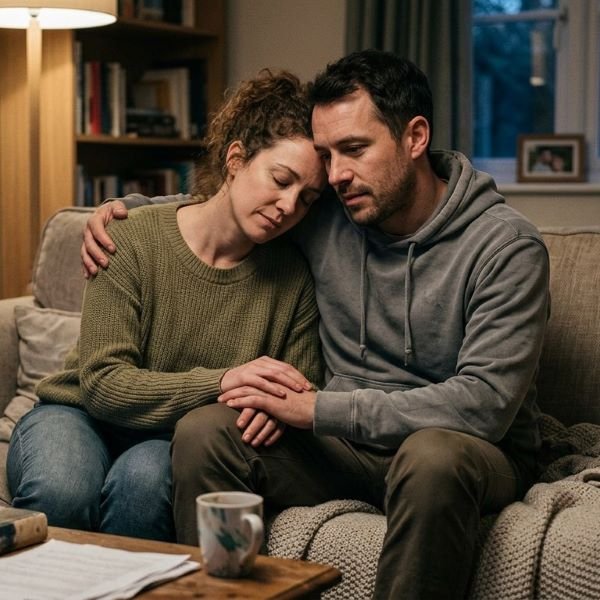
Every relationship will ultimately encounter those hard times - those seasons that put its strength to the test. Prior to facing some very real challenges in my own relationships, I really did believe that love itself would always be sufficient to conquer all obstacles. I kind of pictured strong couples naturally staying happy because they'd finally found 'the one'. Real life showed me so much more value. Even the best relationships still grapple with money problems, career uncertainty, family conflicts, our health concerns, misunderstandings, emotional pressure, and totally unexpected life events. These challenges don't always mean your relationship is failing. Often, they really show you just how well two individuals collaborate when life gets incredibly tough. I've come to understand that resilience isn't so much about dodging hardships altogether but rather figuring out how to confront them as a team - rather than letting them push us further apart.

After a while, I started seeing that very resilient relationships were actually constructed long before any big crises hit. They develop themselves day-by-day through small actions of trust, genuine communication, mutual respect, patience, and deep emotional support. Whenever life's tough times roll around, these habits truly form the basis that lets couples stay connected - even when things seem utterly overwhelming. Developing resilience doesn't mean creating the illusion that everything is fine all the time or completely dismissing uncomfortable emotions. Rather, it involves making the choice to stick with each other over and over again - even amidst uncertainty, disappointment, or actual fear.


Strategies for Handling Ghosting with Grace

Strategies for Handling Ghosting with Grace

At a certain point in my dating life, I experienced something I didn't really grasp at first - ghosting. Everything appeared to be going fine indeed. Conversations flowed smoothly, there was quite a lot of common ground, and then all of a sudden... nothing. No explanation, no closure whatsoever, simply complete silence. Initially, I sort of took it very personally indeed. I questioned everything I'd said, what I might have done all wrong, and whether I had unknowingly triggered it. That state of not knowing was really often harder than even a direct 'no' would have been.

Over time I really started to view ghosting through a different set of eyes. Although it's always somewhat uncomfortable I realized that how I respond to it is way more important than the act itself. Ghosting doesn't define my value, yet my response to it may actually shape both my mind and my subsequent experiences. Learning to cope with ghosting with lots of poise became a quite important part of my ongoing personal development process indeed.

Embracing Vulnerability and Authenticity in Your Relationship

Embracing Vulnerability and Authenticity in Your Relationship

I thought that being a vulnerable person would portray me as a weak but I now know that is not true. Actually it takes a lot of bravery and emotional strength to be vulnerable. For example, every time I let myself show fear, doubt or what not about anything, my lover would feel sorry rather than hating me and this increased our relationship between each other. Through my disclosures, I provided a platform for my partner to follow suit thereby enhancing genuine communication.

In vulnerability, both individuals get an opportunity to offer unfeigned care to each other. This is important in establishing confidence because it proves that one can take the risk of telling the truth even when they know that it might not be well received. From this I understood that real love is built on such reciprocal opening up so that each party is loved as they are in reality. As days went by, I came to see that being open creates a safe haven in which people can freely grow close with each other without being afraid of negative comments.