
Communication

Understanding How Your Zodiac Sign Influences Dating Habits

Understanding How Your Zodiac Sign Influences Dating Habits

I used to view zodiac signs largely as an entertaining amusement for quite some time. Occasionally I'd glance at online horoscopes or overhear my friends discussing astrology - especially when it came to their relationships - but I hardly ever actually thought about how certain personality traits associated with zodiac signs might impact your dating life itself. However, over time, I began to notice some pretty interesting patterns in how folks approached romance, communication, forming intimate bonds emotionally, handling conflicts, and even attracting someone. Some individuals naturally went very fast in their relationships, while others really needed a deeper emotional sense of security before they would start opening themselves up. Some had a huge fondness for excitement and spontaneity, whereas others much preferred a more stable, consistent arrangement. Although astrology should by no means determine a person's entire identity, I began to see how it could sometimes provide quite useful insights into emotional tendencies - as well as related behaviors in one's relationships.

What I find particularly interesting about zodiac signs in dating isn't so much the notion of finding out who will be perfectly compatible - but rather getting a deeper look at emotional patterns and communication styles instead. Every person brings along all sorts of emotional strengths, vulnerabilities, personal expectations, and also established romantic habits into their relationships. Sometimes conflicts really happen because two people don't care less about each other - but rather because they show love, affection, or their emotional requirements in rather different ways. Studying zodiac tendencies can help cultivate a lot more self-awareness - as well as more emotional intelligence in your dating life. Here in this article, I intend to take a closer look at just how zodiac signs might affect your dating habits, emotional behavior, your attraction patterns - as well as your relationships' dynamics all while remembering that individual growth, effective communication, and emotional exertion truly matter much, much more than astrology alone.

How to Keep Long-Distance Dating Fun and Engaging

How to Keep Long-Distance Dating Fun and Engaging

Long-distance dating can really be one of the most emotionally demanding experiences in modern relationships. I used to think that distance essentially weakens connections since couples could never spend regular physical time together. At first, the thrill of texting, video calls, and those late-night chats might feel super romantic and intense - but after some time, reality starts to show up. Different schedules, time zones, feelings of loneliness, and limited physical closeness can gradually build emotional frustration if both people aren't very intentional about holding onto the relationship. I've learned that long-distance dating demands quite a bit more than affection itself. It needs creativity, a lot of emotional effort, better communication, patience - and a willingness to keep the relationship emotionally alive every day, even when physical distance seems really tough.

What actually surprised me most was that long-distance dating can also really strengthen emotional intimacy in its own way. If two people genuinely care for each other distance often pushes them to develop much deeper communication, emotional openness and a lot stronger trust. Couples really can't rely so heavily on physical presence to keep their connection alive. They have to learn how to emotionally engage with each other even more through conversations, shared experiences - and quite a bit of intentional effort. Over time, I finally understood that keeping long-distance dating interesting and engaging isn't about constantly dodging challenges. It's about finding some very creative ways to just keep growing emotionally despite all the distance. In this article, I'd like to explore how couples can truly keep long-distance relationships pretty exciting, emotionally rewarding, and really deeply connected while figuring out the realities of physical separation itself.

Creating a Relationship Vision Board Together

Creating a Relationship Vision Board Together

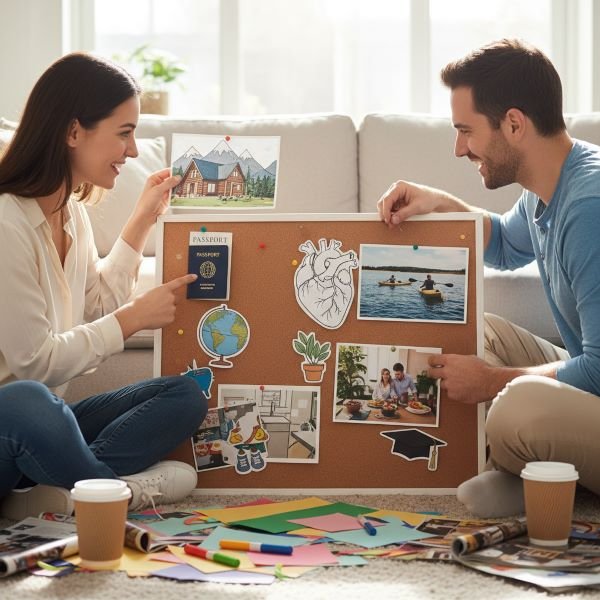
One of the very most significant things I have ever learned about relationships is that love itself is not often enough to make lasting happiness. Attraction, chemistry, and an emotional connection are very much important indeed, yet relationships also require direction, shared knowledge, and proactive growth. In lots of relationships couples get so caught up in their daily tasks that they forget to talk about the life they really wish to build side by side. I have personally witnessed just how simple it's for two people to emotionally drift apart when they stop sharing dreams, goals and meaningful conversations. That is why I believe creating a relationship vision board together can become such a highly effective experience for both partners.

When I first got the idea of relationship vision boards, I assumed they were simply about collecting beautiful pictures and a few romantic notions. But after exploring the concept a bit more deeply I really saw that a vision board is actually all about communication, emotional connection and creating a shared objective. It lets both people show their dreams, values, goals, and expectations visually and emotionally quite well. Even more importantly, it sets up a very safe and inspiring space where couples can talk about the kind of relationship they truly wish to build together. In this article, I intend to explore exactly how creating a relationship vision board together can strengthen our emotional intimacy, improve our communication, and help couples remain connected whilst growing toward a shared future.

Identifying and Addressing Emotional Triggers in Relationships

Identifying and Addressing Emotional Triggers in Relationships

In all relationships I was ever involved in, there were some point of time in conversations where we went off on a tangent, unexpectedly having a very intense chat. A slight thing such as an uttered comment, a certain tone of voice, or misinterpretation of meaning would evoke a strong emotional response. Initially I considered those reactions to be merely arguments or one side being in a bad mood. Nevertheless, with time, I started realizing that most of these events were linked with something profound. These were really emotional triggers, sensitive areas tied to some of our past experiences, fears, and insecurities that could emerge very quickly in a relationship. Upon getting hold of this idea, it helped me to view fights from an entirely new angle.

Identifying emotional triggers does not necessarily imply one is to blame on any side. It is rather concerned with comprehension of how individual experiences affect emotional responses. I got to know that every single individual has emotional patterns developed as a result of family environment and past relationships and different obstacles in their lives. When these patterns collided in a relationship then even tiny issues may turn into far more serious matter than they are supposed to be. Learning how to identify and deal with these triggers aided me in cultivating more sensitivity and self-control in my interactions with people. Instead of reacting quickly, I started out digging down on what might be going beneath the surface which often opened up the way to deeper insight and better manner of communication.

Building Trust During the Early Stages of Dating

Building Trust During the Early Stages of Dating

Trust is actually one of those things people talk about when getting into relationships, but not many folks really get into explaining how it actually works out— especially during the early going. Getting serious with dating, I figured trust was something that just kind of showed up naturally or maybe not. If I got comfy right away, I guessed trust was there. But if I didn't, I figured something was off. Eventually, I got it: trust isn't just flipping a switch; it's actually working on it. Trust has to build itself, usually pretty slow, mostly quietly, through little chats, showing up consistently, and staying emotionally aware. During casual dating, trust isn't about just assuming someone will be okay or getting super vulnerable. It's about seeing how someone shows up, how they communicate, and even how they act with you and the whole thing you're making plans for.

What made early dating tricky for me was getting open while also looking after myself. I wanted some connection, but I didn't want to rush into intimacy or just ignore any warning signs. I realized building trust doesn't mean sharing too much or trying to get attached fast— it's actually getting a foundation where honesty, safety, and respect can all work out naturally. Once I stopped trying to force trust and started actually thinking about how it actually builds up, dating got way less confusing and actually kind of grounded. Trust stopped being something I was hoping for and turned into something I actually worked on, getting it done one conversation at a time.

Balancing Spontaneity With Routine in Relationships

Balancing Spontaneity With Routine in Relationships

Once upon a time, I thought that relationships faced a choice: either excitement or stability. They either were spontaneous and thrilling– like a roller coaster ride– or they were calm, predictable, and maybe even a little bit boring… but never both at the same time! Early on in romantic connections, everything seemed new and electric. Couples would stay up late talking! They made last-minute plans; acted on impulses without overanalyzing too much. However as time went by with these pairs more routines naturally formed for them. And when those routines came along, I began wondering if maybe they were losing something essential from their connection.

I mistook comfort for complacency and familiarity for boredom— and this misunderstanding created lots of unnecessary anxiety about what happens to love as it grows older. Over time I realized that the real challenge wasn’t routine itself but balance! Done in excess, routine can make relationships feel stale (as well as mechanical); meanwhile, too much spontaneity may lead them down an unpredictable road toward chaos. Learning how to balance these two forces changed my experience with love entirely!

How to Celebrate Differences in Personality Types

How to Celebrate Differences in Personality Types

For ages, I honestly thought compatibility meant being similar. I figured the strongest relationships were between people who thought alike, reacted alike without differences, and just had pretty similar approaches to life. When fights popped up, I assumed something had gone wrong. If my partner handled feelings differently or made decisions from a perspective I didn’t get, I saw it as friction not just a variation. Deep down there seemed to be this idea that harmony came from being the same.

Nobody really realizes how restrictive that belief is until it starts quietly holding back both people. By seeking sameness in my relationship, I was unintentionally rejecting growth— like turning away from new experiences. Being with someone whose personality was quite different from mine challenged this belief system rather uncomfortably.

Understanding the Role of Attachment Styles in Dating

Understanding the Role of Attachment Styles in Dating

Initially, my thoughts about attachment styles were like, "Here's another theory about relationships– something you can read in a psychology book and then promptly forget." Nonetheless, everything became extraordinarily clear once I started relating those ideas to my own romantic encounters. The recurrent motifs in my experiences, the sorts of individuals I was consistently drawn toward— even the nature of our disputes— none of it appeared accidental. Rather, it all linked back to fundamental issues concerning how we connect emotionally: namely connections; how we handle stress; and how we express a desire for closeness.

Discovering my personal attachment style really shifted things; it changed how I looked at dating! Attachment theory can also provide insights if you ever wonder why certain relationships feel calm– easy even natural! Meanwhile, others come across as overwhelming; confusing or emotionally exhausting. The basic ways people relate to each other are categorized into four styles: secure; anxious; avoidant; and fearful-avoidant (sometimes called disorganized). These patterns shape not only our communication but also things like how quickly we form attachments and what we do when faced with conflict– or separation!

There’s more than just academic interest at stake here: by understanding both your own style plus that of someone else– whether they’re family members, friends, or romantic partners– it may become possible to influence those relationships for the better!

Talking About Finances: Tips for Transparency

Talking About Finances: Tips for Transparency

Conversation about cash and finances can either bond couples or create silent friction– it’s a subject with real power. Early on in my relationship, I recall feeling awkward bringing it up. I’d rather discuss any topic imaginable— those annoying habits we all have, our aspirations, and even our fears of inadequacy— but money was off-limits. It felt intensely private and serious, as though crossing an unseen boundary. However, once we began building a life together, I realized that avoiding money talk didn’t make things easier; it just resulted in unspoken strain.

What I have discovered since then is that being open about finances involves far more than simply divvying up household costs or comparing salaries— it's really all about establishing trust! Money conversations often reveal deeper values such as responsibility, ambition/drive, and the desire for security. When couples can openly share their hopes as well as concerns around money this has an enormously positive effect on their relationship: they are no longer only discussing emotions but also plans for life ahead. To me this represents one of the most genuine forms of intimacy there is.

Icebreaker Games for Dates to Keep Things Fun

Icebreaker Games for Dates to Keep Things Fun

I have experienced many first dates and am well aware that those initial moments can feel awkward. Both individuals are keenly making an impression; hence, small jokes may elicit excessive laughter, and each party is wondering what to say next. Previously, I believed one simply needed to endure quiet moments– but then I realized icebreaker games could help immensely.

Such activities turn nervous silence into shared laughter, playfulness, and connection. When getting together feels more like chatting than interviewing, chemistry grows naturally. These games are great for that– they give you something light to do together that breaks down barriers and shows who you really are.

It doesn’t matter if it’s your first date or number four: these activities can shift the vibe from tense to relaxed. In this article, I’ll share some of my favorite icebreaker games that have helped me create fun, memorable dates sparking connection and laughter– along with others I’ve coached too!