
Introduction
When considering compatibility within a relationship, religion and spirituality really stand out – topics that delve far beyond just everyday differing opinions. I could love a different kind of music than my partner, have a different taste in food or not agree on how to spend our weekends – yet none of these things would threaten our future together. Religious convictions, though, affect all sorts of things: our view on marriage and family, what is morally right, who we are personally, our cultural traditions – and even our understanding of the purpose of life itself.
One partner might attend religious services every week, whereas the other doesn’t feel attached to any particular faith institution. One could practice certain spiritual disciplines regularly, whereas the other identifies as an atheist or agnostic. Such differences don’t inherently preclude a relationship from being possible – but ignoring them altogether will certainly create problems further down the line. I think the real challenge lies in finding ways to truly appreciate each other’s faiths while still making genuine choices regarding the life we’re trying to construct together.
Firstly, I’d start by setting boundaries confidentially – prior to getting our relatives involved. For instance, when a family member continually puts pressure on my partner to convince me to change faiths, we should decide on a plan of action beforehand. A polite response could be: ‘We really get why this is important to you – but our spiritual choices are something we’ll determine jointly ourselves.’
Ideally, every spouse focuses most of their time on establishing limits with their very own family members. This greatly decreases the likelihood that someone gets left out or held accountable for altering all family customs. I also realize that family influence might lead to some real-life repercussions – such as economic dependence or even where we live. When faced with these situations, setting boundaries requires more thought-out planning over an intense confrontation.
Table of Contents
Understanding What Religion or Spirituality Actually Means to Each of Us
Before really getting into our religious differences, I have to get a better sense of how faith shows up in my partner’s daily life itself. Even if two folks share the same faith, they’ll often live it out quite uniquely. To one person, participating in their faith community might be deeply ingrained in their sense of self, whereas for another, it’s mostly a matter of family custom.
Someone else calling themselves “spiritual” could meditate regularly, believe in a higher power, or have all sorts of personal rituals – all without being part of any traditional religious group. Labels don’t really give me much of an idea at all about how someone’s faith influences their actions. Rather than thinking I already know my partner just because we know their religious background, I’d love to ask them more closely how their beliefs shape their choices, connections, and overall feeling of purpose.
An interesting thing to try is having each of us write down three things separately: which core beliefs make me who I am? what practices hold special meaning for me – yet aren’t set in stone? and what customs am I keeping mainly due to family or cultural ties? Then we can review our lists side-by-side – without jumping right into discussions over them.
For instance, I might find out attending church services each week holds great importance for my partner, while observing a certain holiday is really more about seeing their loved ones. These subtle details really matter since they point out areas where meeting halfway could work. They’ll also help prevent me from viewing every aspect of their faith as absolutely crucial. Figuring out the real significance of a faith-related activity to an individual is basically the initial step towards having a respectful conversation about it indeed.
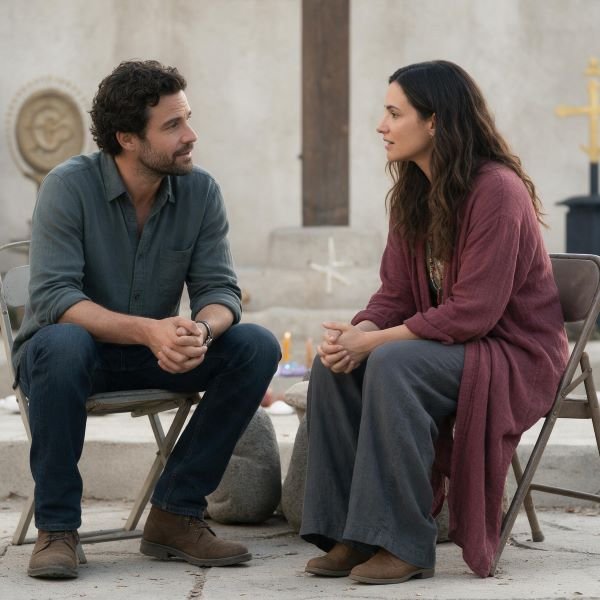
Learning to Discuss Beliefs Without Turning Conversations Into Debates
Religious discussions really get defensive if I tackle them like debates to win. When my partner describes their faith and I quickly start searching for holes in it, they’ll probably feel under attack – not really understood. It’s much the same case when someone tells me my views are quite illogical, out-of-date, or even less moral. I’ve discovered it’s far more helpful to split comprehension from actual agreement.
I can ask why a particular doctrine holds value, what personal experiences formed it, and just how it affects every day life decisions – all while not vowing to follow it myself. Listening really doesn’t demand me to give up on my very own opinions. It basically involves letting another individual describe their entire world view – completely unhampered by always thinking of a counterargument.
A pretty practical strategy I find useful is reflective listening. Right before answering a highly sensitive thing said, I attempt to restate back what I think was said: “So going to church matters so much since it lets you connect with your family and really feels like home base to you. Are you sure that’s right?” This lets my partner correct any misperceptions first – before we even get to discussing our big differences.
I also tend to use statements like “I look at it quite differently since…” instead of “You’re just plain wrong about…”. If the discussion starts getting heated, I’d recommend taking a break and bringing it back up later. The whole point of these talks isn’t to resolve thousands of years’ worth of religious disagreements during dinner time. Rather, it’s about truly getting to know the person I care about deeply – and figuring out just how our diverse viewpoints can exist side-by-side in everyday life.
Identifying Non-Negotiable Beliefs and Areas Where Compromise Is Possible
Respect itself won’t settle all our incompatibilities. Certain religious practices and requirements really do impact daily life – and I truly believe it’s essential to acknowledge this quite early on. Take for instance a situation where one partner holds that their religion demands marriage occur within its fold, yet the other sees no need to convert. Or someone views observing one’s faith as a necessity for the entire house, whereas their partner greatly prefers much more independence. Such discrepancies call for open, genuine conversation since they deeply pertain to individual liberty and long-term expectations. I’d far rather determine a major incompatibility with kindness than invest years holding onto hope that the other will ultimately change course.
Finding it very useful to develop three groups together: non-negotiable, flexible items, and things we’re still undecided on. A non-negotiable point of mine might be keeping my ability to follow my faith or choose not to practice any religion at all. A somewhat flexible wish could be deciding which holidays we observe as a couple. An undecided matter might be if our future kids attend religious studies. By doing so, we can discuss each point and see exactly where our views align. This activity isn’t meant to force one partner to give in or make concessions.
Some boundaries are really worth holding firm – especially those dealing with our freedom of conscience and core identity. What really counts here is distinguishing true incompatibility from differences we can handle by finding mutually acceptable compromises. It also ties perfectly well into developing another crucial aspect of your relationship: discussing your ‘deal-breakers’ without making it an argument itself.

Managing Religious Holidays, Traditions, and Everyday Practices
Religious differences really show themselves quite clearly on holidays and at family get-togethers very often indeed. Picture this – my partner holds Christmas as a very significant religious event, whereas I consider it mainly a cultural holiday myself. Though we’ll likely both really enjoy getting together with our families, our plans regarding attending church services, reciting prayers, giving presents, or setting up the day might vary greatly.
Very similar scenarios can occur all around Ramadan, Eid, Passover, Diwali, or lots of other significant religious observances. I don’t believe the solution lies in always dividing things exactly down the middle. Being fair truly means grasping just which aspects hold the most significance for each person and setting up plans accordingly – showing real respect for their top priorities.
A rather practical first step would be to create a joint schedule way ahead of time before the whole year gets packed with various obligations. We can actually note down the key observances, family gatherings, eating restrictions, and moments when my partner will need a bit more room to breathe. After that, we’ll have a chance to discuss just what level of involvement is acceptable to us. Perhaps I’d love to join my family’s bash but choose not to participate in certain religious customs myself.
My partner would probably completely understand that boundary – and still appreciate my presence very much. It really is essential to come to an agreement that attending some events doesn’t imply I endorse every single aspect related to them. Once our expectations are crystal clear, even old family customs can turn into great chances for learning much more about each other – instead of causing ongoing arguments.
Handling Pressure From Family and Religious Communities
Sometimes the most significant source of tension isn’t the couple itself – but rather others surrounding them. Parents, relatives, or even spiritual groups really hold some very particular views on who someone ought to get married to, whether a partner should change their faith, or even how a future household will practice its spirituality. I totally see why family opinions are important – especially whenever faith and cultural heritage are deeply intertwined.
Yet, I also think that a relationship becomes rather fragile when external expectations constantly take precedence over the decisions made by the two partners themselves. When we’re creating our own common future, we actually need to figure out what choices are ours alone and which family customs we truly wish to preserve.
I’d start out by talking about our boundaries in private beforehand – before even getting other relatives involved. Like, if a close relative continuously tries to pressure my partner into convincing me to change my faith, we need to come to an understanding first. A polite response could be: “We know this holds a lot of significance to you, yet our spiritual choices are something we’ll determine together.” Ideally, every partner takes the lead role in setting boundaries with their very own family members.
This lessens the likelihood of one person feeling like they’re the odd one out – or worse, being held responsible for altering family customs altogether. I also acknowledge that family influence can result in real-life repercussions – such as financial aid or living arrangements. In such cases, establishing boundaries might demand quite a bit of thoughtfulness instead of an all-out confrontation.

Discussing Marriage and Raising Children Before They Become Urgent Decisions
Marriage and parenting are among those subjects where religious differences really matter most. A pair might easily accept each other’s views for many years – yet discover later on that they hold very different ideas on weddings, faith education, baptisms, circumcisions, food restrictions, or even attending prayer sessions together.
I wouldn’t like to take it for granted that all such issues get sorted out naturally when kids finally come along. At that time, feelings might be very intense indeed, relatives could become more involved, and choices will truly seem pressing. Although we mightn’t be planning kids right away, really talking over our expectations can let us know quite well if we have a somewhat reasonable plan for raising a family together.
I’d approach this whole conversation with particular examples instead of making general promises. Rather than merely promising our kids will learn about both cultures, I would ask exactly what that entails in everyday life. Will they participate in worship services? Take part in faith-based lessons? Celebrate both sides of our families’ festivals? Be encouraged to pose lots of questions and ultimately decide their own path? What if a kid holds opinions quite different from either one of us parents?
We really need to think about how best to manage disagreements in public view – so as not to undermine each other in front of our youngsters. If getting married is part of our plans, I’d also check on the specific demands of any faith-based service we’d like to hold, because various traditions and organizations have many differing rules. Such conversations may be rather awkward – however knowing things clearly beforehand is ever so much kinder than finding out we have irreconcilable expectations way down the road.
Conclusion
Handling different perspectives on religion or spirituality really brought home to me that compatibility is a lot more complicated than just finding someone who agrees with everything I believe. I can totally respect another person’s faith – even if I don’t share it myself – appreciate their traditions without joining in, and grasp their values without giving up mine. Still, genuine respect demands a lot more than just being polite. It calls for conversations all about our daily routines, what our families expect from us, our personal limits, our plans for marriage and kids.
All the little details actually matter quite a bit because they show us whether our differences will get along just fine outside the lovely, relaxed setting of the beginning stages of a new romance. When I tackle these topics with genuine interest, total honesty, and a real willingness to listen, I really increase the chances of building a relationship based on far more realistic ground realities.
The most essential thing I’ve learned is that true love shouldn’t demand either partner to erase themselves. I’d like a relationship where both partners feel free to express their convictions without mockery, make intelligent decisions without being forced, and start some common customs without faking out the fact that there are real differences between us. A few disagreements will probably stay unresolved – and that doesn’t necessarily mean failure itself. What counts most is whether we can live peacefully with those differences and still work together on all the big life choices.
If our beliefs take us towards pretty incompatible futures, actually facing that reality can also be a sign of deep respect. In the end, a very strong relationship isn’t evaluated by how well one person tries to change the other. It’s really measured by whether two people can create a life so full of honesty, total freedom, thoughtfulness, and genuine caring – all stronger than the need to always see eye-to-eye on every little thing.

FAQs
Q1: Can relationships succeed even though partners hold very different religious views?
A1: Yes. Relationships really can work – provided both partners truly respect each other’s right to believe what they like, open up honestly every time there’s a problem, and manage all the daily tasks together effectively. But some of these differences might just cause quite a few problems, especially concerning marriage, having kids, or adhering to certain obligatory faith-based practices.
Q2: Should you bring up your religious views pretty early in dating process?
A2: If my faith has a significant impact on how I live every day – or even shapes my long-term goals – then yes, I’d like to talk about it relatively soon. Not necessarily on the very first date itself (no theology debates please!), yet trying to sidestep an enormous compatibility problem for many months usually doesn’t end well.
Q3: What if my partner actually asks me to change my faith?
A3: I’d really ask them why this conversion thing matters so much to them – and also get clear on their expectations here. Changing one’s faith is such a deeply personal choice – it shouldn’t ever be done because someone else demands it for the sake of holding onto a relationship.
Q4: How can we honor both of our unique religious festivals and celebrations?
A4: We’ll have to figure out which customs hold the greatest value for each of us, decide upon some level of participation, and see how best to balance out our families’ expectations too. Celebrating together isn’t always necessary to share exactly the same beliefs – more important is showing genuine respect for each other’s limits and needs.
Q5: What if our families flatly reject our religious difference?
A5: First off, I’d help establish a unified plan with my partner regarding our decisions and boundaries. Then we could try talking nicely but firmly with our relatives while being aware that gaining their approval might take a lot of time – and might not happen at all.
Q6: How should couples with different worldviews approach raising kids together?
A6: Specific conversations will be key. We’d have to address quite a few things: religious education, special life events like weddings or funerals, holiday practices, family involvement, and really how much space children will get to form their own opinions spiritually over time as they mature further.
Q7: Will disagreeing with my partner about their faith be seen as rather impertinent?
A7: Absolutely not! Disagreeing and being impertinent are completely different beasts altogether. I can certainly express my position very clearly while still treating my partner’s faith extremely seriously indeed. Mocking, belittling, manipulating, or attempting to dictate their spiritual path crosses a much darker line altogether.
Q8: At what point should those faith-related differences be seen as essentially irreconcilable?
A8: I’d say consider them basically a non-starter whenever they demand one partner abandon core values, consent to abusive control tactics, or plan for a future they truly don’t really want themselves. A respectful break-up might sometimes be far better than enduring endless conflicts.