
Growth

How to Keep Growing Together While Growing Individually

How to Keep Growing Together While Growing Individually

One of the biggest lessons I've learned about relationships is that love alone doesn't necessarily guarantee long-term growth or an emotional connection. At the start of a relationship, things usually seem very exciting and effortless - because both people naturally put lots of energy into one another. But as time goes by, life changes. Careers progress, our personal objectives change, our duties increase, and we keep on developing as individuals. I've seen quite a few relationships really struggle - not because love vanished, but because one or the other (or sometimes both) people stopped growing in a healthy way. Couples may grow individually but really drift emotionally apart at times. Other times they focus so much on the relationship itself that they lose their own identity, self-confidence, or sense of direction again. Finding a balance between your personal growth and your relationship's growth is really one of the toughest challenges that couples face every day.

After some time passed, I started to think that healthy relationships really shouldn't make two people choose between loving each other and developing themselves. Actually, the best relationships often consist of two individuals who continuously evolve - all while also giving each other tons of emotional support. I truly believe that relationships get even more rewarding when both partners feel perfectly free to grow, work towards meaningful goals, and improve themselves even more - without ever feeling emotionally detached from their lover. At the same time, personal development should not lead to an emotional distance or a kind of competition within the relationship. The real key is figuring out how to grow together - yet still respect each person's personal path. In this article, I'd like to delve into how couples can build their emotional closeness, mutual support, and shared bond - all while continuing to develop themselves in healthy and meaningful ways once again.

Building Strong Relationships With Your Partner’s Friends

Building Strong Relationships With Your Partner’s Friends

When I initially started a committed partnership, I considered the most significant bond I really needed to build to be with my partner - and although that's very true indeed, I soon came to realize there was another layer frequently overlooked: your partner's friends themselves. Initially, I paid little attention to this aspect at all. I assumed as long as my relationship with my partner was robust, everything else would naturally slot into place. Yet over time, I began to notice the considerable impact friendships could have on a relationship itself. Friends are generally part of your partner's background, their support network, and their everyday life.

As I started spending even more time around my partner's friends, I realized that building a positive relationship with them wasn't really about trying to impress anybody - it's actually about comprehension and respect. These individuals often know your partner in ways you're still getting to know quite well yourself. Rather than viewing them as outsiders, I began to perceive them as part of the larger picture of my partner's life itself. When I approached these relationships with an open mind instead of a lot of hesitation, everything changed. The dynamic became considerably more relaxed, interactions seemed much more natural, and it created a feeling of harmony that actually strengthened the relationship overall ever so much.

When and How to Discuss Exclusivity in Dating

When and How to Discuss Exclusivity in Dating

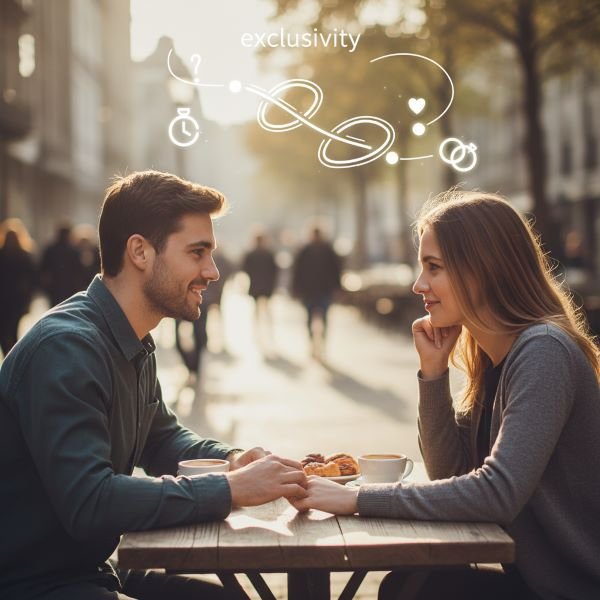
These days dating seems more complicated than before. As I got more familiar with contemporary dating, it was clear that the initial phase of getting to know someone was interesting, but a bit puzzling. Spending time together, holding conversations, building connection but then comes an unsaid question deep within one's mind of where it could all be headed. Eventually that uncertainty matures into curiosity, and curiosity may finally develop into the demand for understanding. And this is where the chat around exclusivity starts. I once thought that exclusivity just happened naturally and wouldn't need a word. However after a while I realized that our assumptions are very likely to be wrong when both people do not have the same view.

Talking about exclusivity may present itself as intimidating because it brings out vulnerability. It entails being honest regarding what we desire, how we feel, and the direction which we wish the relation might take. In the beginning of my dating experiences I had a tendency to evade such talks because I had fears that talking about it would create tension or frighten off the individual involved. As a result of gaining some level of experience I came to realize that having clarity really signifies high degree of emotional maturity. Open conversation concerning exclusivity facilitates the mutual comprehension among the two individuals regarding their specific expectations and plans. The moment you communicate about these matters such way leaves room for growth of natural trust and regard.

Identifying and Addressing Emotional Triggers in Relationships

Identifying and Addressing Emotional Triggers in Relationships

In all relationships I was ever involved in, there were some point of time in conversations where we went off on a tangent, unexpectedly having a very intense chat. A slight thing such as an uttered comment, a certain tone of voice, or misinterpretation of meaning would evoke a strong emotional response. Initially I considered those reactions to be merely arguments or one side being in a bad mood. Nevertheless, with time, I started realizing that most of these events were linked with something profound. These were really emotional triggers, sensitive areas tied to some of our past experiences, fears, and insecurities that could emerge very quickly in a relationship. Upon getting hold of this idea, it helped me to view fights from an entirely new angle.

Identifying emotional triggers does not necessarily imply one is to blame on any side. It is rather concerned with comprehension of how individual experiences affect emotional responses. I got to know that every single individual has emotional patterns developed as a result of family environment and past relationships and different obstacles in their lives. When these patterns collided in a relationship then even tiny issues may turn into far more serious matter than they are supposed to be. Learning how to identify and deal with these triggers aided me in cultivating more sensitivity and self-control in my interactions with people. Instead of reacting quickly, I started out digging down on what might be going beneath the surface which often opened up the way to deeper insight and better manner of communication.

Supporting Your Partner’s Mental Health Journey

Supporting Your Partner’s Mental Health Journey

Getting help for your partner's mental health is one of the really important—and sometimes tough— jobs we can do when we're in a relationship. I used to think just loving someone was enough. I thought if I showed I cared, offered a hand, and tried to stay positive, my partner would get a little better during tough times. But after a while, I got it– mental health doesn't work out quite right. It's not something you can fix with getting reassured or being hopeful, even trying hard. Mental health stuff is kind of tricky, really personal, and often gets hidden from outsiders. When my partner started working on their own mental health thing, I realized I didn't really get what actually supporting them looks like.

Realizing that things changed is realizing support isn't just about saving someone up– it's about actually getting along with them. It's about being patient, humble and okay with getting uncomfortable without trying to control it all. Getting my partner's mental health brought up my own expectations, fears and limits. I kind of got that love isn't proven by fixing fights, but by sticking around and dealing with it. Getting into this job totally changed how I think about partnership, being empathetic, and emotionally tough in our relationship.

Understanding the Role of Attachment Styles in Dating

Understanding the Role of Attachment Styles in Dating

Initially, my thoughts about attachment styles were like, "Here's another theory about relationships– something you can read in a psychology book and then promptly forget." Nonetheless, everything became extraordinarily clear once I started relating those ideas to my own romantic encounters. The recurrent motifs in my experiences, the sorts of individuals I was consistently drawn toward— even the nature of our disputes— none of it appeared accidental. Rather, it all linked back to fundamental issues concerning how we connect emotionally: namely connections; how we handle stress; and how we express a desire for closeness.

Discovering my personal attachment style really shifted things; it changed how I looked at dating! Attachment theory can also provide insights if you ever wonder why certain relationships feel calm– easy even natural! Meanwhile, others come across as overwhelming; confusing or emotionally exhausting. The basic ways people relate to each other are categorized into four styles: secure; anxious; avoidant; and fearful-avoidant (sometimes called disorganized). These patterns shape not only our communication but also things like how quickly we form attachments and what we do when faced with conflict– or separation!

There’s more than just academic interest at stake here: by understanding both your own style plus that of someone else– whether they’re family members, friends, or romantic partners– it may become possible to influence those relationships for the better!

Creating a Bucket List Together to Build Shared Dreams

Creating a Bucket List Together to Build Shared Dreams

I've always been a fan of the bucket list concept, you know those cool and even kind a wild dreams we hope to tick off before life just flies past us? But it was only when making one with somebody important that I really got how strong it can be. Crafting a shared list isn't merely selecting fun adventures or organizing cute date ideas; it's about deliberately intertwining two lives.

It turns into this living record of who we are as a pair, where we wish to head, and what we aspire to build. Upon starting our joint bucket list, I found out that collaborating on targets was not the only thing occurring: by doing so I also got to know more about my companion– such as things he fears, desires, wonders about; as well as those tiny moments that light him up inside!

There’s something different about intimacy when people dream together– it feels like nothing else. This kind of imagining opens up conversations both big and small: it makes chatting about the future easier (and more fun), stretches your brain in new ways… and helps a relationship move into an exciting space full of potential rather than getting stuck in predictable old patterns. This article will explore why creating lists is not only excellent fun but could also serve as a powerful tool for building lasting love— plus provide tips on how best to go about doing both things!

Icebreaker Games for Dates to Keep Things Fun

Icebreaker Games for Dates to Keep Things Fun

I have experienced many first dates and am well aware that those initial moments can feel awkward. Both individuals are keenly making an impression; hence, small jokes may elicit excessive laughter, and each party is wondering what to say next. Previously, I believed one simply needed to endure quiet moments– but then I realized icebreaker games could help immensely.

Such activities turn nervous silence into shared laughter, playfulness, and connection. When getting together feels more like chatting than interviewing, chemistry grows naturally. These games are great for that– they give you something light to do together that breaks down barriers and shows who you really are.

It doesn’t matter if it’s your first date or number four: these activities can shift the vibe from tense to relaxed. In this article, I’ll share some of my favorite icebreaker games that have helped me create fun, memorable dates sparking connection and laughter– along with others I’ve coached too!

How to Handle Relationship “Slumps” Without Overreacting

How to Handle Relationship “Slumps” Without Overreacting

I thought maybe something was wrong or that my feelings were changing. But with age came the knowledge that such “relationship slumps” are not just normal occurrences; sometimes they serve as an opportunity for bonding.

Relationships, much like life itself, follow cyclical patterns– although nobody likes to admit it! The thrilling & passionate early days naturally settle into something more calm and steady over time. And yet when everyday stresses responsibilities and routine get in the way even couples who adore each other can drift apart slightly. The key isn’t avoiding slumps altogether- it’s handling them with patience understanding how to nurture the connection when things feel average.

In this article I want to share some insights gained over time into spotting relationship slumps managing your emotions during quieter periods plus rekindling closeness without making a huge fuss or jumping to scary conclusions!

Strategies for Preventing Relationship Complacency

Strategies for Preventing Relationship Complacency

At first, I thought love was just enough in my relationship. You know that initial excitement, and feeling so close with someone— I believed it would last forever. However, as days turned into years and the demands of work and daily routines took hold, it became apparent how simple it is for a relationship— to fall into a comfy pattern that might get a bit dull. This led me to an interesting discovery: relationships need more than just love. They actually require continual work. Getting too comfortable is like a hidden danger for long-term relationships. Complacency doesn’t just pop up suddenly with big fights or major problems. Instead, it creeps in quietly through small things— forgetting to say thanks, missing those deep talks, or putting off time together because "we'll do it later."

I've seen how this subtle drift can make even strong couples feel far apart. That’s why I decided to treat my relationship like a garden. You know? If you don’t water it, take care of it, and protect it, weeds— in this case complacency— will eventually take over. So here I wish to share some insights about how to prevent complacency in relationships so that one can enjoy a long-lasting romance! Such information isn’t just theory but practical knowledge from personal experience that has strengthened not only love but also companionship for me.