Introduction
Relationships nowadays find themselves within a world vastly different from what our grandparents’ generation was familiar with. Although love, trust, communication, and our emotional bond still serve as the base of good relationships, social media really brings a whole new degree of difficulty into play. Platforms such as Instagram, Facebook, TikTok, Snapchat, and X offer countless chances for connecting – however, they’ve also brought up issues concerning expectations, comparison, our private lives, seeking validation, jealousy, and communication.
I have seen that quite a few relationship problems nowadays aren’t really due to a scarcity of love itself. Rather, they frequently stem from miscommunications and certain assumptions related to our online activities. Even something simple like posting a picture, a delayed message, ‘liking,’ or commenting on someone else’s post occasionally causes intense emotional responses – things we’d probably never experience without social media integrated into our everyday lives.
After some thought, I figured out that social media itself isn’t really the issue here. It’s actually the way we understand others’ online actions – along with developing certain expectations surrounding our digital behavior – that poses the biggest challenge. Every single couple is unique in terms of what makes them comfortable regarding their personal space, showing affection publicly, making online friends, and engaging with social media. Conflicts usually occur whenever we don’t discuss these expectations very clearly.
One partner might view social media as pretty insignificant, whereas another believes one’s online presence really shows your level of dedication and emotional involvement. Grasping these differences is absolutely crucial if you want to keep your relationship in balance – especially in today’s digital age. In this article, I’ll like to delve deeper into how couples can deal with their social media expectations more realistically – all while safeguarding trust, open communication, and our intimate emotions within the relationship itself.
Table of Contents
Understanding How Social Media Influences Relationships
Something I’ve really learned is how deeply social media affects our relationships – more so than lots of folks actually think. It’s not just somewhere we post pictures or status updates anymore. Social media has turned into quite a space where relationships get shown off, judged, evaluated, and even compared by others. As a result, our online actions very frequently hold significant emotional value that goes way beyond the screen itself. Posting one photo together or omitting a relationship from public view altogether can spark some really intense emotions based on each individual’s hopes and fears.
I’ve seen social media generate loads of extra room for miscommunication since digital communication really lacks context. Someone might ‘like’ a friend’s post with no romantic thoughts involved whatsoever, yet their partner could read into it quite differently. Likewise, a slightly late message response will have a perfectly innocent explanation, but seeing it through the lens of social media activities can create anxiety all too easily. The more emotionally invested individuals get in analyzing online actions, the simpler it gets for making assumptions instead of having actual conversations.
Another pretty key point I’ve observed is that social media intensifies our visibility. Previous generations didn’t really have the chance to see every day of each other’s lives all the time. Nowadays, a lot of details about our personal lives are out there for everyone to see. That increased visibility can really build connections if we use it positively – however, it can also heighten feelings of insecurity and competition when couples get too caught up in what they see online themselves.
The Danger of Comparing Your Relationship to Others Online
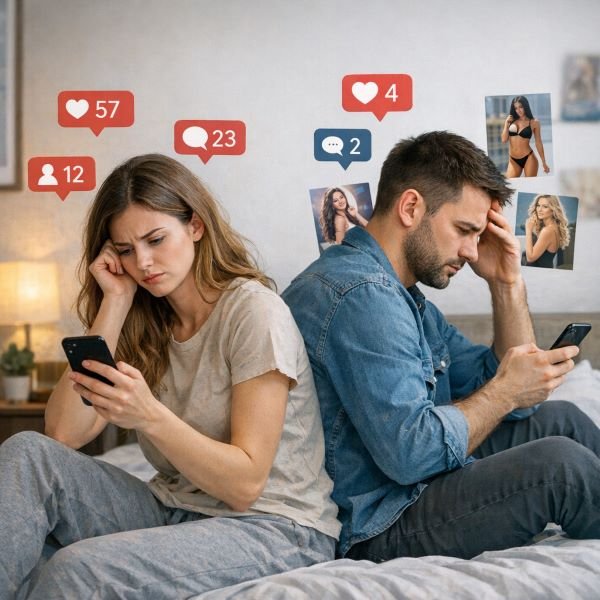
Observing firsthand has shown me that one major challenge is the constant urge to compare our relationships to those portrayed on social media. Very easily, we browse through images of romantic getaways, really expensive gifts, surprise proposals, and very ‘perfect’ couples – then start wondering if our own relationship stacks up. The problem is that social media hardly ever displays everyday moments, arguments, emotional difficulties, or all the hard work that goes into building a truly healthy relationship.
I discovered that comparing ourselves can subtly harm our relationship satisfaction since it draws our attention away from what’s really going on in our relationship. Rather than really appreciating true emotional intimacy, folks might get preoccupied with what seems lacking. An incredibly supportive, loving, and emotionally rewarding relationship will sometimes appear lacking just because it doesn’t look like what we see someone else post online. This frame of mind generates quite unnecessary discontentment – even causing couples to miss out on their many existing strengths.
Another thing about comparison is that social media frequently presents ‘best-of’ versions rather than actuality itself. Most folks naturally display happy times a lot more than tough conversations, emotional challenges, or personal hardships. Comparing a genuine relationship to someone else’s carefully crafted content creates an unfair benchmark indeed – as one comparison includes reality itself whilst the other comprises selectively chosen moments.
Discussing Social Media Expectations Openly
Something I really believe in is that lots of social media-related fights might be prevented by having very honest chats indeed. Very frequently, individuals think their partner should instantly know their expectations concerning online actions. If those unseen expectations aren’t met, disappointment and anger arise. I discovered that actually talking about your social media limits and likes openly is one of the best things couples can actually do.
Some folks quite like sharing important relationship events publicly, whereas others would much rather hold their private life close to their heart. Neither method is inherently correct or incorrect really. Issues start when partners hold very different expectations – yet never discuss them ever. A person might see posting pictures together as a sign of dedication, whilst another views social media mostly as just a side thing. Without actual conversation, both individuals might totally misunderstand each other’s motives.
I also think couples ought to talk about subjects such as contacting ex-partners, making online friends, leaving public comments, sending private messages, and our preferences for our own privacy. These conversations aren’t even remotely about controlling one another. Rather, they help us gain much clearer insight – and develop greater mutual understanding. Knowing exactly where both parties truly feels comfortable will greatly decrease pointless arguments – and tons of extra emotional stress too.
Balancing Privacy and Public Relationship Sharing
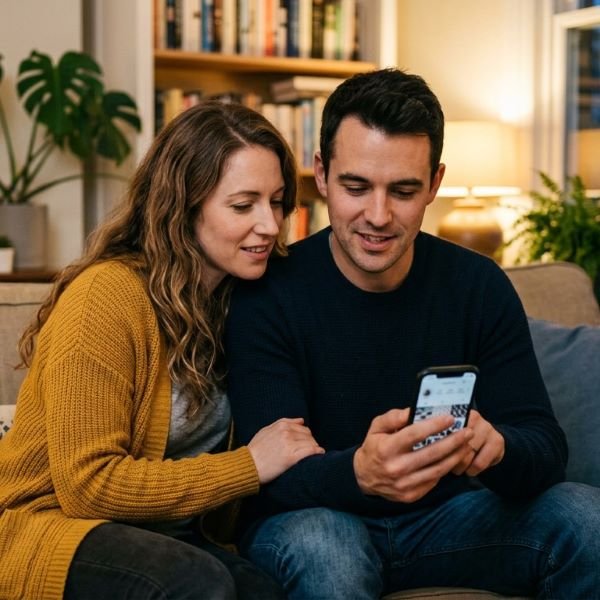
One of the most intriguing relationship challenges in today’s digital era concerns finding a balance between our desire for privacy and our need for visibility. A few couples genuinely appreciate sharing all aspects of their relationship very publicly online – whilst others really want to keep quite a lot of their personal lives hidden away. I’ve come to see that neither way of doing things is inherently any better than the other. Rather, it’s crucially important whether or not both partners truly feel at ease – and respected.
I’ve observed that many folks link being publicly open with commitment and affection itself. They delight in uploading photographs of themselves together, celebrating their anniversary online, and expressing gratitude very publicly indeed. To them, sharing those special relationship moments really counts – and it can actually be emotionally quite validating too. Conversely, other people hold their privacy close because they think relationships flourish best when we protect them somewhat from external opinions – and excessive attention.
An additional vital factor to consider here is that having your own space doesn’t equate to hiding everything away secretly. I’ve witnessed cases where one partner presumes that wanting more seclusion implies a lack of commitment altogether – even though this isn’t necessarily so. Certain individuals just happen to feel a lot more at ease keeping certain private moments off social media altogether. Grasping the difference between genuine seclusion and deliberate concealment is absolutely key to preventing totally unnecessary miscommunications.
I also firmly believe that couples ought to regularly assess just how much sharing really works well for them. Because as relationships naturally evolve over time, comfort levels will likely shift too. What’s essential is establishing a method of sharing that truly takes into account both people’s individual desires – while still upholding trust and that all-important sense of emotional security. The healthiest balance is usually found by reflecting on your couple’s genuine core values – rather than just trying to meet external social expectations.
Managing Jealousy and Insecurity Triggered by Social Media
Social media has really opened up a whole world of possibilities for jealousy and insecurity to show their faces in our relationships. I’ve witnessed situations where something quite innocuous – like sending a follow request, leaving a comment, or engaging in a photo conversation – triggers all sorts of emotional distress. Although these reactions are frequently dismissed as overreactions, I truly believe they usually point out much deeper feelings that really need empathy instead of criticism.
Something I learned along the way is that social media very often makes pre-existing insecurities a lot worse instead of creating them from scratch. If there’s already a lack of trust or not much communication going on, online activities can rather quickly turn into things to be suspicious about. Individuals might start analyzing each other’s behavior, trying to read between the lines, or even inventing whole scenarios with very little factual basis. This kind of emotional cycle can certainly cause a great deal of tension within the relationship.
I also came to understand that jealousy is quite frequently linked to fear more so than anger. Right behind a lot of social media-related disputes is a fear of being rejected, replaced, or emotionally abandoned. By getting at those core emotions in an honest manner is generally far more useful than bickering over what was posted online. Whenever couples concentrate more on their emotional requirements rather than accusing each other, finding solutions becomes so much simpler.

Avoiding Validation Dependency Through Social Media
One problem I really believe lots of us deal with these days is relying way too heavily on social media validation. Likes, comments, reactions, and lots of public attention give us very temporary sensations of approval. Nonetheless, when our relationship satisfaction gets linked quite closely to online validation, serious emotional problems usually pop up afterwards. I discovered that true relationship security simply can’t be founded upon public approval itself.
Some folks get really let down if their partner doesn’t put them in a post quite as often – or doesn’t show affection very openly online all that regularly. While such feelings make sense somewhat, I truly think we should make a point of distinguishing between online validation and actual emotional connection. A partner who hardly ever writes something on social media might still be incredibly dedicated, helpful, and loving every single day in our lives. Focusing almost entirely on those public displays sometimes takes our attention away from even more significant parts of our relationship itself.
I also saw that social media validation typically sets some pretty shifting goals for us. Regardless of just how much public attention a relationship actually gets, there’s usually some other pair posting even more intricately or getting way more engagement elsewhere. Running after validation really becomes quite exhausting since it counts so heavily on external approval instead of focusing internally on your own relationship satisfaction levels itself.
Creating Healthy Digital Boundaries Together
Healthy relationships often demand very clear boundaries – and social media isn’t any different really. I’ve learned that boundaries aren’t so much about limiting things or controlling others. Rather, they’re all about developing genuine mutual respect and a sense of emotional security together. Each couple will naturally have their own particular comfort zones – which is exactly why discussing boundaries quite openly is so very essential.
Some couples draw boundaries around communicating with previous partners themselves, whilst others center on issues of privacy, posting habits, or even how long they spend online. Really, it’s not so much what specific boundaries one sets that matters more – but rather the actual act of creating them together. When both individuals take part in the conversation, boundaries truly do feel far more cooperative than imposed. This process really strengthens our trust and sense of mutual respect itself.

Prioritizing Real-Life Connection Over Online Appearance
The most crucial thing I’ve discovered is that real life connections are significantly more vital than our digital profiles. Social media can serve some purpose in communication, enjoyment, and sharing experiences – yet it should never be used to evaluate the well-being of our relationships. An apparently flawless relationship online might secretly struggle intensely, whereas one that hardly shows up on social media could be incredibly rewarding and emotionally very secure.
I see many couples become a lot happier by concentrating on developing significant memories together rather than posting almost everything online for everyone else’s viewing pleasure. Real laughter, emotional support, common objectives, and high-quality time truly strengthen bonds much more so than even the most popular online posts ever will. Such events lay the groundwork for long-lasting closeness since they originate from genuine human connection rather than external perceptions all the
Finally, I think the most enduring relationships are those that stay very grounded in reality itself. They stress building trust, open conversation, empathy, and mutual esteem far beyond what we display online. If we concentrate on cultivating our connections privately, social media transforms into a helpful resource – not a source of added stress or anxiety.
Conclusion
Managing social media expectations within contemporary relationships demands a lot of self-awareness, communication, trust, and emotional intelligence indeed. Social media has fundamentally altered how we get along with each other, communicate, and display our relationships quite publicly – yet it’s also brought about all sorts of new chances for misinterpretation, comparing ourselves to others, feelings of inadequacy, and very unrealistic expectations. I’ve discovered that lots of social media-related arguments aren’t even actually about the platform itself. Rather they’re about different expectations, emotional requirements, and communication gaps that really need some attention – and empathy too.
The healthiest relationships aren’t always those that show up the most impressively online. Instead they are those where both individuals truly feel respected, valued, understood, and emotionally safe all the time. By having open discussions about what you expect, establishing some much-needed boundaries, trying not to constantly compare yourselves to others, and focusing on your real-life connections, couples can really reap the rewards of social media – without letting it harm their relationship at all. In the end, lasting love is created through trust, consistency, effective communication, and actual emotional closeness – not at all through likes, comments, or public approval.
FAQs
Q1: Can social media harm our personal relationships?
A1: Yes. Social media really can lead to more comparison, jealousy, low self-esteem, confusion, and very unattainable standards – all if we’re not super thoughtful with how we use it.
Q2: Should we put our partner on our social media profiles?
A2: There isn’t one ‘right’ answer here. A few couples love posting about their relationship out in the open, whilst others much prefer a little more seclusion. Really what counts most is having an open chat and showing lots of respect towards each other’s wishes.
Q3: Why do comparisons on social media damage relationships even further?
A3: When we compare our actual lives to extremely edited posts online, this creates all sorts of unachievable expectations and deep-seated disappointment quite easily indeed.
Q4: Just how can we reduce feelings of jealousy caused by social media?
A4: Keeping an open line of conversation, offering some reassurance, working on building your trust, and talking about your emotions quite frankly really can help lower jealousy and self-doubt significantly.
Q5: Is wanting complete privacy on social media some kind of warning sign?
A5: Really not always so. Loads of folks truly appreciate their private time – but they don’t hide their partner either. Your desire for seclusion and actually hiding something are two completely different things altogether here.
Q6: Would creating social media boundaries be a good idea for us?
A6: Definitely yes. Having healthy boundaries set will help avoid those pesky misunderstandings and will let you know you’re really being respected – and thus feeling way more emotionally stable yourself too.
Q7: What happens when our partners have completely different social media habits than we do?
A7: That’s totally normal too! By talking openly about what you’re comfortable with, what you expect, and your own comfort level, you’ll be able to discover all sorts of common ground that works perfectly well for both of you.
Q8: Does it matter more whether we show affection online or connect in real life itself?
A8: In reality, connecting in real life really counts for way more. Building that genuine trust, effective communication, lots of emotional support, plenty of physical touch, and making memories together is where true, long-lasting relationship strength really lies – long after any online post has faded away.