Connection

Creative Ideas for Virtual Dates

Creative Ideas for Virtual Dates

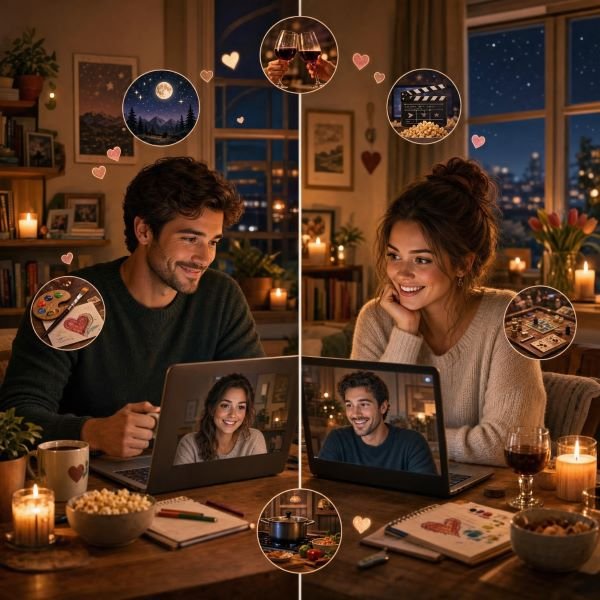
When I initially thought about virtual dating, I pictured two individuals seated in front of their screens struggling quite hard to keep a video conversation really engaging. I really believed it would all too often seem like a somewhat lesser alternative to actually meeting somebody face-to-face. Upon further consideration though, I started to see that a virtual date could become so much more than just a lengthy video call. By being a bit more imaginative, two people could cook together, engage in games, visit various locations virtually, watch films, learn new things, and indeed build common memories - all whilst residing many hundreds or even thousands of miles away from one another. Virtual dates can be very helpful in long-distance relationships, particularly if travelling is quite challenging, or during those early days of online dating when I'd love to get to know someone a bit better before planning an actual in-person gathering.

I've also discovered that excellent virtual dates greatly benefit from the exact same attributes that make classic dates truly unforgettable: curiosity, effort, humor, conversation, and genuine focus. Merely flipping on a camera doesn't instantly establish a sense of connection. I really need to consider what both of us appreciate and choose activities that provide numerous opportunities for interaction - rather than merely staring at each other, unsure about what to say next. Some virtual dates might be rather romantic and meticulously planned out, while others will be perfectly laid-back and quite spontaneous. I don't think every single date has to be highly elaborate. At times, having a cup of coffee while discussing our week can hold significant meaning, whereas on another day we may wish to set up an entire themed evening.

Strategies for Supporting Each Other During Major Life Transitions

Strategies for Supporting Each Other During Major Life Transitions

Major life changes will alter your relationship in ways you've never quite anticipated before. A new job, moving away, getting married, having children, taking care of elderly relatives, retiring, significant financial shifts, health problems, job loss - or even starting a whole new phase of your life - really affect your daily routines, your priorities, your moods, and even who we think we are all at once. What makes these times particularly tough is that the transition doesn't usually just affect one person. Even if it seems like one partner is right in the midst of the main change, the other person is usually adjusting right along with them. I've learned that's where relationships can either get much more strained - or incredibly stronger. The difference really comes down to how well both folks communicate, offer support to each other, and modify their expectations while life keeps changing all around them.

I also came to realize that support doesn't necessarily mean having all the perfect answers or keeping all difficult emotions at bay. Sometimes the most valuable support is just being there, truly listening closely, and reminding each other that your relationship continues to be a very safe space during moments of uncertainty. Major transitions really bring out fears, excitement, sadness, stress, and hope all at the same time - and those feelings don't always arrive perfectly organized. I believe couples actually do best when they let go of trying to manage change so smoothly themselves and instead concentrate on adjusting together. In this article, I'd like to delve into some practical techniques for supporting each other during major life transitions while holding onto trust, your emotional bond, and the feeling that both people are still very much on the same side.

Dating Tips for People with Social Anxiety Disorders

Dating Tips for People with Social Anxiety Disorders

Dating has never really been straightforward - yet when social anxiety becomes your companion, it makes things so much harder indeed. I truly understand what it's like to analyze each conversation all too well even before it occurs, re-run every single word afterwards, and worry that just one little blunder will destroy any chance of starting a genuine bond. Before lots of dates, I used to envision all sorts of potential problems. Would I utter something rather silly? Would there be awkward silences? Would the other person find me dull, nervous or disinterested? Such ideas often got quite loud - almost convincing me to avoid dating altogether. Over time though, I came to realize that my biggest hurdle wasn't always the date itself but rather the fears I'd built up within my own head long before it even started.

Tips for Dating After Significant Weight Loss or Transformation

Tips for Dating After Significant Weight Loss or Transformation

Dating after a major transformation can be both thrilling, incredibly empowering - and also downright intimidating all at once. New possibilities might arise, yet so do lots of new thoughts concerning your self-worth, opening up emotionally, establishing trust, and being authentic. I learned that genuinely healthy dating isn't really about searching for validation thanks to a physical transformation. Rather, it's all about forming real connections based on truthfulness, common values, an actual emotional bond, and mutual respect.

My transformation might have unlocked several new doors - but it's actually my character, my communication style, my empathy, and my emotional maturity that really decide if a relationship stands the test of time. In this article, I really want to share the lessons I've learned about dating after considerable weight loss - or indeed any major personal transformation. My hope is that these insights will inspire you to approach your new chapter with a lot more confidence whilst remaining completely faithful to the person you've worked extremely hard to become.

How to Handle Meeting Your Date’s Pet

How to Handle Meeting Your Date’s Pet

When we consider really significant markers in our dating lives, we usually concentrate on meeting our partner's friends, family members - or even colleagues. Nonetheless, there's another major milestone that's occasionally overlooked: getting to know your date's pet. Initially, this may appear rather insignificant - yet I've discovered it will actually give away quite a lot about a person's day-to-day life, values, duties, and emotional bonds. To lots of folks, their pets aren't just creatures residing in their house. Instead, they're deeply cherished companions, sources of comfort, members of the family themselves - and a very integral aspect of each and every day. Due to this reason, encountering a date's pet can hold much more emotional value than a lot of us at first imagine.

I have also observed that the way somebody handles their pet provides extremely useful information regarding their own nature. Similarly, my reaction towards their pet will affect how they view me themselves. Whether the pet is a lively dog, a pretty aloof cat, a curious rabbit - or some other treasured companion, the interaction becomes an essential component of our dating life. Herein lies my intention: to explore some down-to-earth advice for navigating this key moment with self-assurance, consideration - and authentic interest whilst further strengthening the bond between those two individuals involved.

Managing Social Media Expectations in Modern Relationships

Managing Social Media Expectations in Modern Relationships

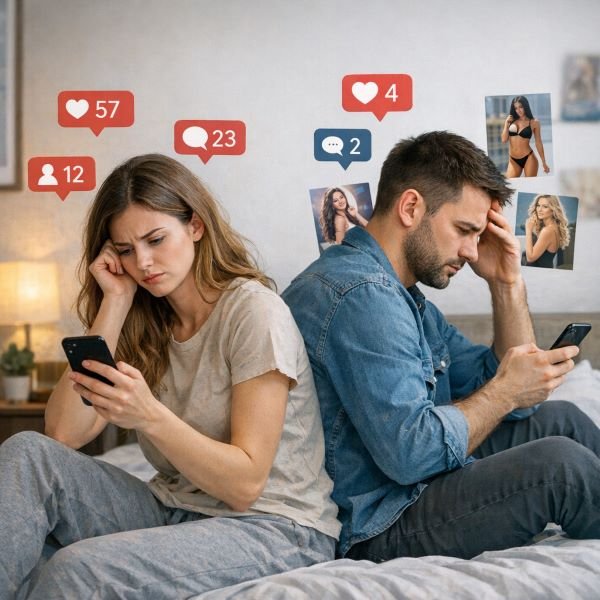
Relationships nowadays find themselves within a world vastly different from what our grandparents' generation was familiar with. Although love, trust, communication, and our emotional bond still serve as the base of good relationships, social media really brings a whole new degree of difficulty into play. Platforms such as Instagram, Facebook, TikTok, Snapchat, and X offer countless chances for connecting - however, they've also brought up issues concerning expectations, comparison, our private lives, seeking validation, jealousy, and communication. I have seen that quite a few relationship problems nowadays aren't really due to a scarcity of love itself. Rather, they frequently stem from miscommunications and certain assumptions related to our online activities. Even something simple like posting a picture, a delayed message, 'liking,' or commenting on someone else's post occasionally causes intense emotional responses - things we'd probably never experience without social media integrated into our everyday lives.

After some thought, I figured out that social media itself isn't really the issue here. It's actually the way we understand others' online actions - along with developing certain expectations surrounding our digital behavior - that poses the biggest challenge. Every single couple is unique in terms of what makes them comfortable regarding their personal space, showing affection publicly, making online friends, and engaging with social media. Conflicts usually occur whenever we don't discuss these expectations very clearly. One partner might view social media as pretty insignificant, whereas another believes one's online presence really shows your level of dedication and emotional involvement. Grasping these differences is absolutely crucial if you want to keep your relationship in balance - especially in today's digital age. In this article, I'll like to delve deeper into how couples can deal with their social media expectations more realistically - all while safeguarding trust, open communication, and our intimate emotions within the relationship itself.

How to Keep Growing Together While Growing Individually

How to Keep Growing Together While Growing Individually

One of the biggest lessons I've learned about relationships is that love alone doesn't necessarily guarantee long-term growth or an emotional connection. At the start of a relationship, things usually seem very exciting and effortless - because both people naturally put lots of energy into one another. But as time goes by, life changes. Careers progress, our personal objectives change, our duties increase, and we keep on developing as individuals. I've seen quite a few relationships really struggle - not because love vanished, but because one or the other (or sometimes both) people stopped growing in a healthy way. Couples may grow individually but really drift emotionally apart at times. Other times they focus so much on the relationship itself that they lose their own identity, self-confidence, or sense of direction again. Finding a balance between your personal growth and your relationship's growth is really one of the toughest challenges that couples face every day.

After some time passed, I started to think that healthy relationships really shouldn't make two people choose between loving each other and developing themselves. Actually, the best relationships often consist of two individuals who continuously evolve - all while also giving each other tons of emotional support. I truly believe that relationships get even more rewarding when both partners feel perfectly free to grow, work towards meaningful goals, and improve themselves even more - without ever feeling emotionally detached from their lover. At the same time, personal development should not lead to an emotional distance or a kind of competition within the relationship. The real key is figuring out how to grow together - yet still respect each person's personal path. In this article, I'd like to delve into how couples can build their emotional closeness, mutual support, and shared bond - all while continuing to develop themselves in healthy and meaningful ways once again.

How to Keep Long-Distance Dating Fun and Engaging

How to Keep Long-Distance Dating Fun and Engaging

Long-distance dating can really be one of the most emotionally demanding experiences in modern relationships. I used to think that distance essentially weakens connections since couples could never spend regular physical time together. At first, the thrill of texting, video calls, and those late-night chats might feel super romantic and intense - but after some time, reality starts to show up. Different schedules, time zones, feelings of loneliness, and limited physical closeness can gradually build emotional frustration if both people aren't very intentional about holding onto the relationship. I've learned that long-distance dating demands quite a bit more than affection itself. It needs creativity, a lot of emotional effort, better communication, patience - and a willingness to keep the relationship emotionally alive every day, even when physical distance seems really tough.

What actually surprised me most was that long-distance dating can also really strengthen emotional intimacy in its own way. If two people genuinely care for each other distance often pushes them to develop much deeper communication, emotional openness and a lot stronger trust. Couples really can't rely so heavily on physical presence to keep their connection alive. They have to learn how to emotionally engage with each other even more through conversations, shared experiences - and quite a bit of intentional effort. Over time, I finally understood that keeping long-distance dating interesting and engaging isn't about constantly dodging challenges. It's about finding some very creative ways to just keep growing emotionally despite all the distance. In this article, I'd like to explore how couples can truly keep long-distance relationships pretty exciting, emotionally rewarding, and really deeply connected while figuring out the realities of physical separation itself.

Creating a Relationship Vision Board Together

Creating a Relationship Vision Board Together

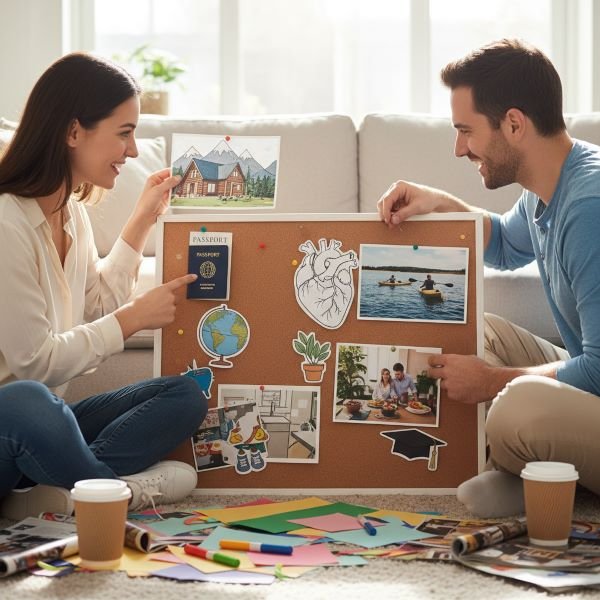
One of the very most significant things I have ever learned about relationships is that love itself is not often enough to make lasting happiness. Attraction, chemistry, and an emotional connection are very much important indeed, yet relationships also require direction, shared knowledge, and proactive growth. In lots of relationships couples get so caught up in their daily tasks that they forget to talk about the life they really wish to build side by side. I have personally witnessed just how simple it's for two people to emotionally drift apart when they stop sharing dreams, goals and meaningful conversations. That is why I believe creating a relationship vision board together can become such a highly effective experience for both partners.

When I first got the idea of relationship vision boards, I assumed they were simply about collecting beautiful pictures and a few romantic notions. But after exploring the concept a bit more deeply I really saw that a vision board is actually all about communication, emotional connection and creating a shared objective. It lets both people show their dreams, values, goals, and expectations visually and emotionally quite well. Even more importantly, it sets up a very safe and inspiring space where couples can talk about the kind of relationship they truly wish to build together. In this article, I intend to explore exactly how creating a relationship vision board together can strengthen our emotional intimacy, improve our communication, and help couples remain connected whilst growing toward a shared future.

Using Shared Hobbies to Build Chemistry on a Date

Using Shared Hobbies to Build Chemistry on a Date

When I began dating, I really thought that chemistry was either something that appeared instantly - or didn't exist whatsoever. I believed it was all about attraction, having good conversations, and that very first spark people often talk about. And while those things are important, I finally understood that chemistry isn't always something that just happens - it's something that you can build over time. Many of the most unforgettable and meaningful connections I've had didn't result from perfect conversations - but from shared activities that let each of us really relax and have fun together.

That's where discovering hobbies truly transformed my perspective entirely. Rather than concentrating on what to say or attempting to impress someone, I started focusing on what we could do together. It might be something simple - going for a walk, trying out a new thing, or checking out a hobby we had in common - those shared activities produced a very natural connection. I observed that when we were engaged in something really enjoyable, the pressure really dissipated. Conversations flowed a lot more easily, laughter came quite naturally, and the whole atmosphere felt much more authentic. By using shared activities on a date isn't just about filling time - it's about creating a setting where chemistry can develop naturally.