Expectations

Recognizing Signs That You’re Not Ready to Date

Recognizing Signs That You’re Not Ready to Date

There was a time in my life when I thought that being single necessarily meant I should be dating all the time. It felt like the completely natural next step – meet someone, start building a connection, and then move forward. I didn't really ever ask myself whether I was really ready for it though. Instead I pretty much just went along with what I thought others expected of me hoping that readiness would sort of catch up eventually. Yet over time, I started to see some patterns in my experiences. Some dates felt super forced, while others' connections didn't develop, and in certain moments, I felt really emotionally disconnected - even when I tried engaging.

That's when I really started to grasp something very key: being available to go on dates is totally different from being ready to go on them. Readiness is a lot deeper – it involves having a clear sense of one's emotions, knowing oneself extremely well, and also the ability to really, truly connect with another human being. Without those things, dating can often feel puzzling, exhausting, or even quite frustrating indeed. Realizing when you're not ready isn't a failure at all – it's actually a real sign of self-respect itself. It lets you take a step back, get to know yourself even better, and get set up for much healthier connections later on. Learning to notice these signs greatly helped me approach dating with a whole lot more purpose and clarity.

Handling Surprises: The Art of Managing the Unexpected in Relationships

Handling Surprises: The Art of Managing the Unexpected in Relationships

The most significant lesson I have gathered on relationships in recent times is that despite thorough planning, life will still present unexpected moments. In the past I was convinced that stability signified predictability, assuming if everything followed the set plan then the relationship would automatically remain strong. Reality was far from this assumption though. The unexpected situations whether emotional responses, changing circumstances, false impressions or sudden challenges were not exceptions but part of the relationship itself. It is our reaction towards these unexpected events that really matters most than the events themselves.

Initially I didn't cope well with the unexpected turns. I reacted emotionally tried to control things or felt annoyed when my expectations were not met. Over time nevertheless I came to see that relationships demand a certain degree of flexibility, patience and emotional intelligence. It is worth noting that not all surprises carry negative value they can give room for growth deepen your bond together and present new viewpoints too. Instead of considering surprises as interruptions I started viewing them as chances to increase communication trust and mutual comprehension between spouses.

How to Keep Your Dating Life Private from Social Media

How to Keep Your Dating Life Private from Social Media

At some point in my life, I really didn't think twice before sharing aspects of my personal life online. Social media had truly become an essential part of our day-to-day communication - so posting updates, photos, or experiences actually seemed almost automatic. Whenever I started dating someone new, my initial thought was to share the excitement - photos together, hints about the relationship, or sometimes very subtle hints that others might catch. It really did seem quite harmless back then, like a great way to celebrate something special. However over time, I really started noticing that the more I shared, the more problems developed.

I started realizing that relationships do require their own space to really grow without constant outside input. When too much of our dating life is shared online, it really opens the door to people's opinions, assumptions, and sometimes even completely unnecessary pressure. What initially began as a very private connection between just two people slowly starts to become something people observe, analyze, and sometimes judge. That change really made me reassess how I approach social media. I learned that maintaining your privacy doesn't really mean keeping your relationship hidden - it means really protecting it. By keeping a lot of my dating life offline, I could concentrate more on building my connection itself rather than showing it off to everyone else.

Identifying and Addressing Emotional Triggers in Relationships

Identifying and Addressing Emotional Triggers in Relationships

In all relationships I was ever involved in, there were some point of time in conversations where we went off on a tangent, unexpectedly having a very intense chat. A slight thing such as an uttered comment, a certain tone of voice, or misinterpretation of meaning would evoke a strong emotional response. Initially I considered those reactions to be merely arguments or one side being in a bad mood. Nevertheless, with time, I started realizing that most of these events were linked with something profound. These were really emotional triggers, sensitive areas tied to some of our past experiences, fears, and insecurities that could emerge very quickly in a relationship. Upon getting hold of this idea, it helped me to view fights from an entirely new angle.

Identifying emotional triggers does not necessarily imply one is to blame on any side. It is rather concerned with comprehension of how individual experiences affect emotional responses. I got to know that every single individual has emotional patterns developed as a result of family environment and past relationships and different obstacles in their lives. When these patterns collided in a relationship then even tiny issues may turn into far more serious matter than they are supposed to be. Learning how to identify and deal with these triggers aided me in cultivating more sensitivity and self-control in my interactions with people. Instead of reacting quickly, I started out digging down on what might be going beneath the surface which often opened up the way to deeper insight and better manner of communication.

Tips for Staying Positive After a Dating Rejection

Tips for Staying Positive After a Dating Rejection

In the past, rejection in dating impacted me to a degree I didn't acknowledge. Outwardly there was an effort to remain composed and act as if it were no big deal, with self-talk about how being turned down was simply "part and parcel of dating." Inside each time this happened it stirred up a complex mix of feelings, including disappointment, embarrassment, and doubt. It didn’t simply make me lose the chance for a connection– it also brought home those exposed feelings when putting oneself forward and not being picked.

With time came the realization that getting rejected while dating really stung because it taps into something deeply human: a need to be seen, accepted, and valued. Getting turned down isn't some cosmic sign that you're broken— it's more like evidence you had the guts to take a chance. But working on staying positive after rejection wasn’t just about dodging the blues or pretending it didn’t matter. It meant figuring out how to handle the experience without letting it become who I was. This shift took time– plus being honest with myself and willing to rebuild my confidence from the inside out.

Understanding the Role of Attachment Styles in Dating

Understanding the Role of Attachment Styles in Dating

Initially, my thoughts about attachment styles were like, "Here's another theory about relationships– something you can read in a psychology book and then promptly forget." Nonetheless, everything became extraordinarily clear once I started relating those ideas to my own romantic encounters. The recurrent motifs in my experiences, the sorts of individuals I was consistently drawn toward— even the nature of our disputes— none of it appeared accidental. Rather, it all linked back to fundamental issues concerning how we connect emotionally: namely connections; how we handle stress; and how we express a desire for closeness.

Discovering my personal attachment style really shifted things; it changed how I looked at dating! Attachment theory can also provide insights if you ever wonder why certain relationships feel calm– easy even natural! Meanwhile, others come across as overwhelming; confusing or emotionally exhausting. The basic ways people relate to each other are categorized into four styles: secure; anxious; avoidant; and fearful-avoidant (sometimes called disorganized). These patterns shape not only our communication but also things like how quickly we form attachments and what we do when faced with conflict– or separation!

There’s more than just academic interest at stake here: by understanding both your own style plus that of someone else– whether they’re family members, friends, or romantic partners– it may become possible to influence those relationships for the better!

Tips for Dealing With Long-Term Relationship Boredom

Tips for Dealing With Long-Term Relationship Boredom

Anyone who has been in a long-term relationship may reach this stage where things feel a little dull— but the good news is you’re not the only one. I have felt this way too: when the routine overshadows romance and the comfort once enjoyed starts to seem merely predictable. It doesn’t mean that relationship is finished or the love has gone. It just means you are human living life growing alongside another person who is themselves growing and changing too.

Boredom? In long-term relationships? That’s something lots of couples go through, yet you’ll hardly ever hear people talking about it. Admitting that things feel a bit dull can bring on all sorts of feelings– like guilt, for example. As if by saying so you were letting down your other half or not really loving them anymore.

But here’s the thing: noticing these moments is actually really brave– and good for you! Because it shows (a) how much you care about your relationship and (b) that you want things to be different. So in this article, based on things I have noticed and experienced plus chats with others who have been there too, I will share some honest tips alongside practical ideas for rekindling those flames!

Creating a Bucket List Together to Build Shared Dreams

Creating a Bucket List Together to Build Shared Dreams

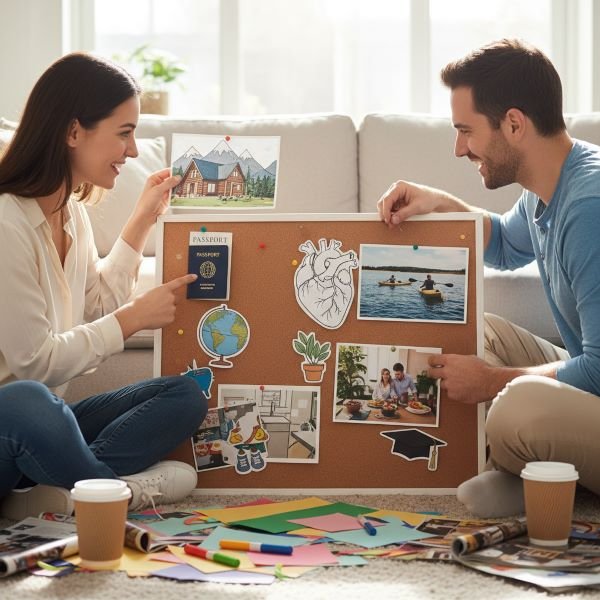
I've always been a fan of the bucket list concept, you know those cool and even kind a wild dreams we hope to tick off before life just flies past us? But it was only when making one with somebody important that I really got how strong it can be. Crafting a shared list isn't merely selecting fun adventures or organizing cute date ideas; it's about deliberately intertwining two lives.

It turns into this living record of who we are as a pair, where we wish to head, and what we aspire to build. Upon starting our joint bucket list, I found out that collaborating on targets was not the only thing occurring: by doing so I also got to know more about my companion– such as things he fears, desires, wonders about; as well as those tiny moments that light him up inside!

There’s something different about intimacy when people dream together– it feels like nothing else. This kind of imagining opens up conversations both big and small: it makes chatting about the future easier (and more fun), stretches your brain in new ways… and helps a relationship move into an exciting space full of potential rather than getting stuck in predictable old patterns. This article will explore why creating lists is not only excellent fun but could also serve as a powerful tool for building lasting love— plus provide tips on how best to go about doing both things!

Handling Third-Date Expectations: Tips for Success

Handling Third Date Expectations: Tips for Success

Looking back at my dating experiences, the third date seems quite important. The first date is mostly for first impressions– attraction, chemistry, and whether there's enough common ground to warrant another meeting. The second date acts as confirmation; we find out if that initial spark was genuine or just fleeting. But what about the third date? Things seem to become more intentional at this point. It feels like both individuals are expressing a desire to potentially develop a deeper connection.

I will admit that I used to feel significant pressure around third dates. Questions would run through my mind: Should this be the point where we define the relationship? Does it need to get more physical? Or have a serious talk? I recall going on a third date once and overanalyzing every single aspect. I realized my focus on “meaning” prevented actual relaxation and enjoyment. Nevertheless, I learned over time that the third date need not be burdened with heavy expectations. Rather it can present an exciting opportunity— striking a balance between fun and forming a deeper connection! In what follows, I shall share some insights into handling those third-date expectations more easily and confidently; so there is less stress– and more genuine connecting!