
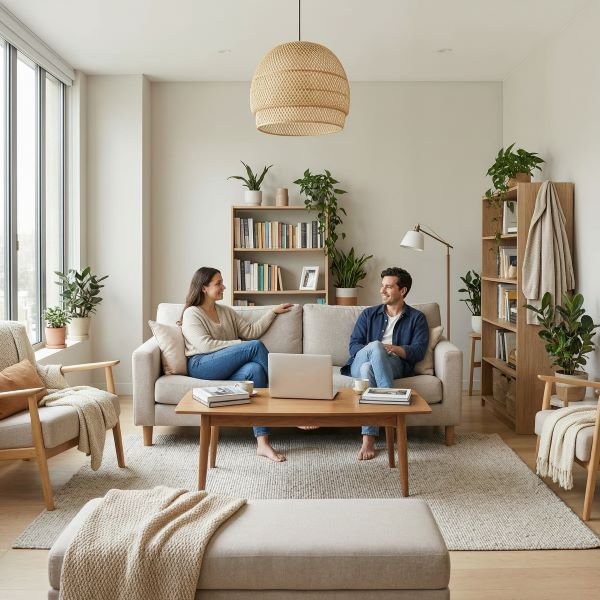
Tips for Creating Personal Space in Shared Living Arrangements
Living with a person you care about is one of the best experiences in a relationship. I have discovered that sharing a house provides opportunities for closer connection, effective communication and feeling of unity that is difficult to emulate elsewhere. Commonly performed daily activities become shared experiences– cooking meals together, resting after a long day, or just spending calm moments in the same area. Initially, this nearness may feel thrilling and consoling, just as if everything is falling into its right place. One gets to spend more time together, learn each other's habits, and construct a life side-by-side.
However over time I came to realize an important thing: permanent closeness can also present some problems if personal space is not respected. Without having enough room to breathe even healthy connections can turn out too much. Little frustrations become larger, tolerance can wear off, and individuality can begin to fade away. I realized that personal area is not about separating from the partner; it is about striking a balance. It lets both individuals to restore their strength, reflect on themselves, and maintain their sense of self. As soon as I understood this I could see that making personal area within common dwelling is not a sign of relationship weakness– it is really a sign of strength and emotional sensitivity.