
Introduction
When I think about all the things we teach children – and that includes the things we don’t — I realize that one of the most important lessons kids learn from their parents are the ways we speak to and interact with each other. Kids watch how you and your partner fight and make up, how you show affection and how you work together. They learn whether or not you apologize, whether or not you keep your promises and whether or not you feel comfortable speaking up for yourself. Even things like cooking dinner together and discussing the budget teach kids about love, respect and partnership.
Teaching children about healthy relationships is a big job, but it doesn’t mean modeling a perfect marriage for your children. To raise children who understand healthy relationships, I believe you have to show them what two imperfect people look like. If you tell your children kindness matters but then constantly shut down your partner’s feelings, how can you expect the children to learn the lesson you’re trying to teach? Whether you live together or apart, here are eight ways you can model healthy relationships for your kids.
Table of Contents
Demonstrating Respect Through Everyday Communication
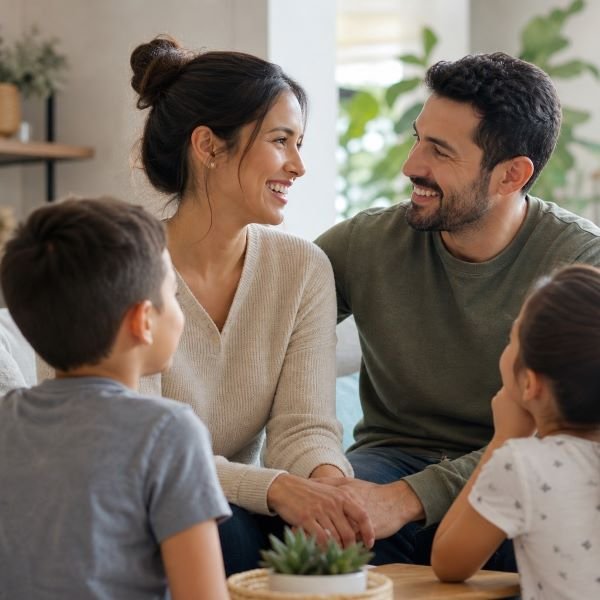
I believe kids learn respect best from how we communicate to one another. It’s one thing to be kind when things are going well, but it’s another thing when we disagree with our spouse, get frustrated, or have conflicting wants. When I interrupt or make jokes at my spouse’s expense, they’ll learn it’s just part of the deal. If, instead, I listen to, and respect where they’re coming from, they see that even though we may not agree, I still love them.
One of the big habits I would embrace is not interrupting the other person and acknowledging that just because I don’t agree with them doesn’t mean I don’t respect them. So if my spouse wanted to do something different on the budget, I could say, “I see why that matters to you, but here’s why this matters to me.” I wouldn’t make jokes at my spouse’s expense in front of the children. And I’d make sure everyone felt like their input was valued during family discussions.
Showing Children How to Resolve Disagreements Constructively
I don’t think it’s important for kids to be in a household where there are no disagreements. It’s important kids see how to work out disagreements, but I do worry about the conflict children are exposed to when parents don’t handle disagreements well. There is a lot of research about conflict between parents and how it affects children. The worst kinds of conflict involve hostility and aggression, which I want my kids to know is not how we work out disagreements.
So if my partner and I disagree about what we want to do over the weekend, I can model how to work out the disagreement by expressing what I want to do and listening to what she wants to do and finding something we both like—that we can do some family things and have some personal time. If it’s getting heated, I say let’s take a break and talk about it after we’ve cooled down. Kids don’t need to be exposed to intense conflicts between parents. If they’re drawn into something, I always reassure them: “We disagreed about that, but we’re working through it. You don’t have to worry about it.”
Expressing Affection and Appreciation Naturally
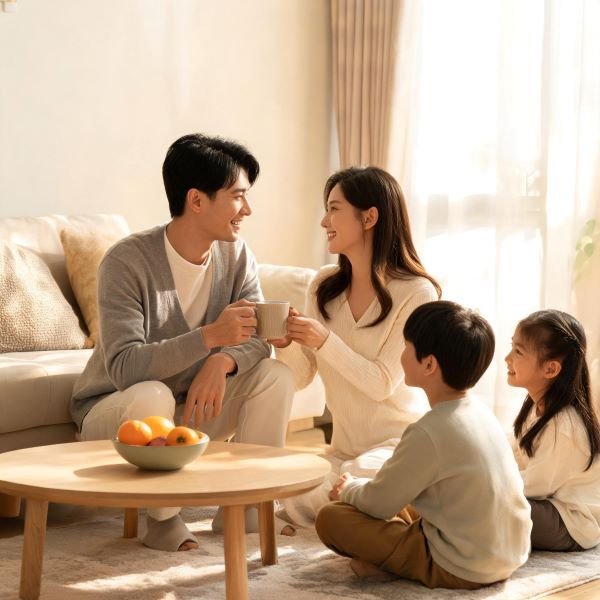
I want children to understand that love is sometimes expressed routinely, not always with grand gestures or expensive presents. When kids see us appreciating each other it shows them that affection doesn’t have to disappear when it’s time to do the household chores—such as cooking, managing money, and parenting.
I try to be specific in how I express appreciation, like saying, “I really appreciate that you made us dinner after your day” or “I appreciate you setting up this fun family outing.” I also want them to understand that physical affection is a two-way street: We hold hands, we hug, but nobody makes you hold someone’s hand or be hugged. I try to teach them that by sharing at the dinner table things that we appreciate about another family member.
Modeling Equality and Shared Responsibilities
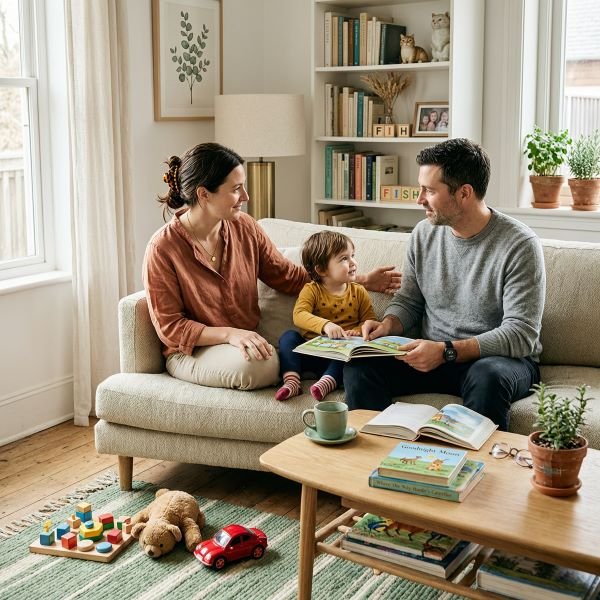
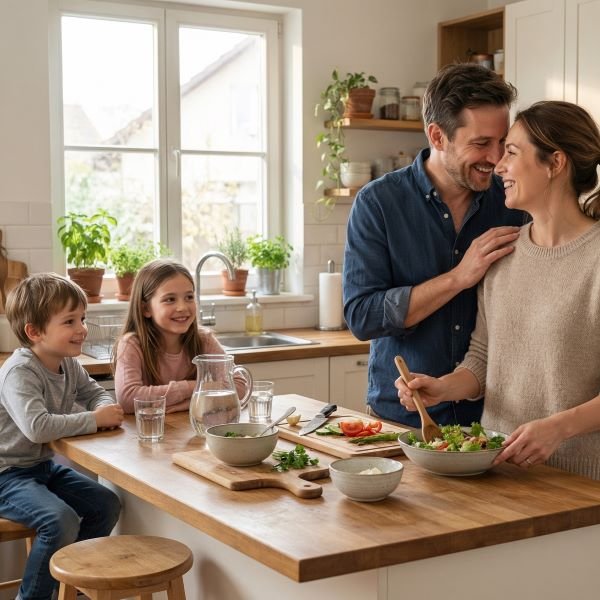
The way you and your spouse split domestic chores can influence how your children come to think about partnerships. If your kids see mom handling all of the household tasks and dad handling all of the decision-making, they may have unrealistic expectations of what men and women should do. I think healthy partnerships are about fair deal-making based on each partner’s abilities and commitments, not gender roles.
To show children what fair looks like, I’d make our teamwork clear. So, for example, we’d have the dad cook dinner and mom do homework, but both parents would clean up. And, of course, kids can do chores at their level. I’d also make sure kids know about the not-so-sexy tasks that are also part of being in a partnership, such as remembering appointments and planning meals.
Teaching Healthy Boundaries and Personal Independence
One thing I want my children to understand, at least when it comes to their parents, is that you can love each other but be separate people with your own interests, hobbies and friends. I don’t want them to see the relationship and expect their own partner in life to monitor their every move or desire them to give up their own hobbies simply because their partner doesn’t like them.
If I love my partner and know they want to spend the day working on their hobby, I shouldn’t be suspicious of that and assume they’re rejecting me. I should be able to set boundaries, such as “I need some quiet time, but let’s talk later.” And, I want my children to understand that if they don’t want to hug a relative, that’s okay and there are other ways to greet them — waving hello, for example.
Responsibility and Apologizing After Mistakes
I think it’s important kids learn from seeing parents apologize. Many parents worry that admitting fault can undermine their authority, but I believe it’s a key part of growing up. If I speak to my partner with impatience or forget something important, if I avoid the issue and just pretend it didn’t happen, kids learn that this is something you do when you get older and are in charge.
I try to model other types of apologies too. An apology has three parts: you have to acknowledge what you did wrong, you have to apologize for it and you have to do something different in the future.
So if I talk over my partner, I’ll say, “I talked over you, and that was rude. I’m sorry. I want to hear what you were saying. So next time I’m going to do XYZ.” If we had a small disagreement, I think it’s great to show kids that there was a repair, but I wouldn’t ever tell the other person in the relationship that they have to forgive me. They need time, and things like this can’t be fixed with just words.
Supporting Each Other During Difficult Times
If your kids learn nothing else from how you handle the tough times in life, they need to know what commitment looks like. No matter what life brings – loss of money, illness, job loss, whatever – children need to understand that there’s a team effort. When things get tough, supporting your partner might mean listening to them vent or shouldering more of the load.
When your partner is going through a tough time at work, I take on more household chores and explain to the children why: “We are supporting each other this week because it’s a busy week.” Dyadic coping – the way couples work together to combat stress – has been shown to be associated with relationship satisfaction, but I’d never expect the kids to take on the emotional load of supporting us.
Helping Children Recognize Healthy and Unhealthy Relationship Behaviors
I do believe that kids should learn by example first, but I also believe in having discussions with them about relationships. Kids are exposed to so many other messages about relationships from their friends, TV, social media, and other families, and some of those messages are about how to be jealous, possessive, manipulative, and even aggressive in a romance. It’s important to them that they learn to spot the difference between a healthy relationship and an unhealthy one.
I like to bring up these conversations in everyday moments. So if a character on TV is in a jealous rage because their partner is spending time with friends, we might have a conversation about “is that a healthy way to feel?” For older kids, we talk about privacy online, consent, peer pressure and signs of bad dating relationships. There is an initiative from the CDC called Dating Matters to help kids with healthy relationship skills and dating violence prevention. I also want my kids to know that if a friendship or dating relationship makes them feel uncomfortable, they can come to me.
Conclusion
Teaching kids about healthy relationships isn’t just about telling them to be kind or respectful. The way I communicate with my partner, fight, show love to each other, work together, and own up to mistakes all contribute to my kids learning how to have healthy relationships. I don’t expect myself and my partner to always get it right, but I do want my kids to see how we work things out even when things get tough.
I want my kids to know that love is about safety, respect, trust, and acceptance. I want them to know that disagreements don’t have to involve humiliation, that boundaries should be respected, and that love shouldn’t be used as a reason to control someone. I don’t know how they will choose to be in relationships when they are adults, but I do know I can help them learn about what makes a healthy partnership.
I also know that showing your kids what a healthy relationship looks like isn’t about having a healthy relationship. Sometimes the best thing you can do for your children is to set boundaries or get out of a bad relationship.
FAQs
Q1: Why should parents model healthy relationships?
A1: Kids often learn from what we do in life. Modeling positive behaviors teaches your kids what a healthy relationship should look like.
Q2: Is it bad for kids to see parents fight?
A2: No, as long as it’s respectful.
Q3: How I teach my kids about healthy relationship boundaries?
A3: I respect their privacy, don’t push physical affection, set healthy boundaries in my relationship, and explain to them that loving someone is not a license to control who they are or to ignore their comfort.
Q4: Do parents have to apologize to each other in front of the kids?
A4: If your kids witnessed a slightly contentious argument, yes. But things you shouldn’t share with your kids shouldn’t be shared with your kids.
Q5: Can single or separated parents teach kids about healthy relationships?
A5: Absolutely. There are ways to model healthy relationships even when you’re a single parent.
Q6: What age should I start teaching kids about healthy relationships?
A6: Starting as early as preschool, you can teach kids about the basics of kindness and respect.
Q7: How do I prevent kids from having unhealthy gender stereotypes?
A7: By modeling healthy behavior and encouraging kids to do what makes them happy without any limitations based on gender.
Q8: What if my relationship has already modeled unhealthy behaviors to my kids?
A8: You do your best to be better and get help if you need it.