
Introduction
There are days my partner comes home exhausted, short on words, or just out of it and I’m left wondering what I did. I replay our conversations and wonder if there was a change in us and get defensive before realizing, no, it has nothing to do with me. Sometimes people just have a bad day and learning to differentiate between those times and those that have everything to do with you is incredibly important to being emotionally mature in a relationship.
Sometimes not taking things personally with your partner on their bad day means striking a balance between empathy for their situation and respect for your own boundaries. You have to know when to be there for your partner without taking on their problems. Or, on the flip side, when to give your partner their space without letting them treat you poorly. Doing both incorrectly is a surefire way to fight about nothing on a night when your partner just had a crappy day at work. In this article, we’ll look at eight ways to handle your partner’s bad days while keeping your own emotions in check.
Table of Contents
Separate My Partner’s Mood From the Quality of Our Relationship
The thing I try to remember is that how my partner is feeling doesn’t necessarily have anything to do with how they feel about me. If my partner doesn’t say much during dinner, I tend to think perhaps they’re not as happy as I am in our relationship. But what if they’re worried about something that came up at work that they’re still ruminating on? Psychologists would say I’m personalizing. That is, I’m assuming something is about me when it may not be.
What I’ve found helps me is to separate fact from interpretation. Fact: My partner hasn’t said much since they walked in the door. Interpretation: They are losing interest in me. Before I do anything, I try to ask myself why I am making the leap that I’m thinking, and what evidence I have to support it. I then turn to my partner and say, “You seem quieter than usual, has something happened to you today?”

Manage My Initial Emotional Reaction Before Responding
Even though I know that I shouldn’t let my partner’s bad moods bother me, I sometimes get upset by their snippy tone, lack of patience, or the fact that they’re not affectionate. My instincts are to lash back or beg for validation. But I don’t want my emotions to run my mouth. I want to know the difference between feeling hurt by our interaction and assuming my partner did something to hurt me.
To help me out, I do a “pause and respond” exercise any time I feel myself getting defensive. I have to identify my emotion, whether this is about now or something from the past and then I have to decide how I’m going to respond. If my partner forgets to greet me with a smile when they see me coming home from work, I chalk it up to their bad day instead of their being inconsiderate of me and give them a minute to calm down before talking to them.
Ask What Kind of Support My Partner Actually Needs
If somebody I care about is having a bad day, I tend to want to help fix their problems. When my partner has a bad day because of a difficult coworker, I want to tell them to go confront the coworker, or speak to management, or quit their job. They probably know they have options, they just want to complain. When we try to fix problems when the only thing the other person wants to do is to vent, it creates further problems.
“Do you want me to listen, help you think about what you should do, or give you space?” I say. That way if they want to talk, I will listen without interrupting, if they want to figure something out, we can do that, if they want space, then I’ll give them space. And I know that some days they might want one and then the other.
Practice Active Listening Without Absorbing Every Negative Emotion
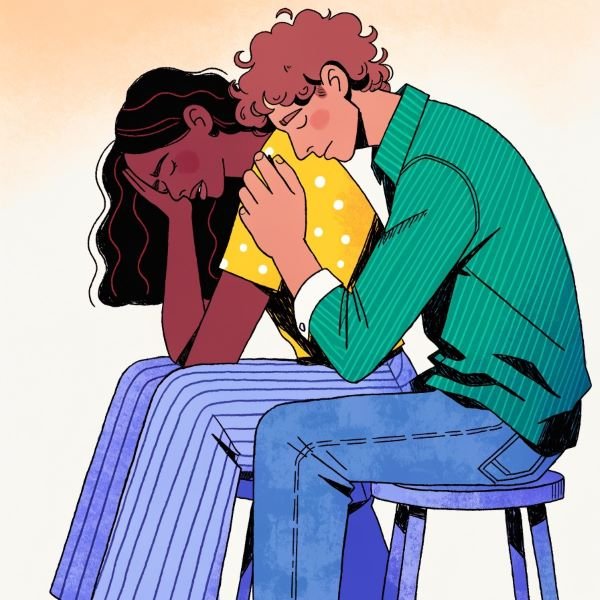
I don’t have to feel what my partner feels. So if your partner is angry about something that happened at work, you can say that you understand they’re feeling those things without feeling angry yourself. If not, you’ll both be tired at the end of the night!
A key listening technique I use with my partner is to reflect on what they’re saying. So if they say their manager was unfair, I might just say something like: “you put a lot of effort into that project and feel like you weren’t appreciated.” I don’t have to take their side or insult anyone else. And I avoid minimizing what they’re feeling with something like “it could have been worse” or “just forget about it.” That’s one reason why I think active listening is a vital skill for any partner to learn – so you can support your partner but not take ownership of their problems.
Give My Partner Space Without Creating Emotional Distance
I understand when they need time to decompress and talk to me about their feelings. Sometimes it’s hard for me to back down and give them space if I’m the type of person who wants to talk things through when I’m upset. (People decompress differently. One person needs to talk, another needs to be left alone, another needs to go for a run, whatever.) If I pester them about what’s wrong after they’ve said they need time for themselves, it starts to feel like pestering.
We have a decompression agreement. So, for example, if one of us had a terrible day at work, we can ask for 30 minutes of alone time. The person asking will say something like “I had a really bad day. It’s not anything between us, but I need some time to decompress.” I know we’re going to talk about it in 30 minutes, so I can go ahead and do my thing, and it’s not like I’m sitting here waiting for the other person to come around.

Maintain Healthy Boundaries When Stress Turns Into Disrespect
Being understanding doesn’t mean allowing behaviors when a person is in a bad mood. I know my partner is exhausted and frustrated, but that doesn’t excuse them yelling at me or trying to make me responsible for things I didn’t do. I think there’s a difference between excusing behaviors because of context and excusing behaviors because of hurt feelings.
If my partner is speaking disrespectfully to me, I would say something like, “I know you’ve had a bad day, I want to help you, but I don’t like being spoken to that way. We can finish this conversation when we’re calmer.” If I see that more than occasionally they are speaking disrespectfully and then not owning up for it, or if I see them trying to control me, I would prioritize myself.
Protect My Own Mood Instead of Becoming Responsible for My Partner’s Happiness
One thing I don’t want to do is to make things all about improving my partner’s mood. If I’m known to cancel things I want to do to try to make them happy, or to attempt to read their face to see if they’re getting happier, that’s not healthy. If I feel like I’ve failed my partner if they’re not happy, that’s not healthy either.
I try to divide things in my head into what I can control, what I can influence, and what my partner does. What I can control are my actions. What I can influence is the mood I set and whether or not I can help them. But what my partner does and how they feel is not my responsibility. So no, I’m not going to sit for the next few hours and worry about whether or not my partner is happy. I’m going to read a book, exercise, cook dinner, call a friend. It doesn’t make me a bad person.

Reconnect After the Bad Day and Learn From the Experience
When my partner has a bad day, I like to think I’m able to learn more about their mind. No, not every situation requires a relationship conversation. Sometimes it’s simply enjoying a breakfast together that will do the trick. But if there has been hurt feelings or misunderstandings, I want to discuss those. If there’s a way we can handle things better the next time around, we need to talk about that too.
I’ll ask questions like “Was there something I did yesterday that could have helped you? Is there something you would prefer to have me do next time?” Sometimes I will share things too, such as the fact that I’m okay giving them space but appreciate knowing it has nothing to do with us.
We can make a list of your “bad day” preferences and what you can do to help each other. This is known as dyadic coping in relationship research and has been shown to improve relationship satisfaction.
Conclusion
Learning to deal with a partner on a bad day without taking it personally has taught me a lot about the importance of emotional independence in a relationship. It lets me love my partner without instantly thinking something is wrong in our relationship when they are down. It allows me to listen without offering solutions, to give them space without assuming the worst and to reassure them without becoming responsible for their happiness. The latter is key to taking the stress out of a relationship.
I want to find a partner who is happy to have imperfect days just as I am, without feeling like they have to pretend to be happy for my benefit. Where bad days don’t equate to disrespect. Where understanding and accountability and intimacy and independence and patience and honesty all work in harmony. If my partner is having a bad day, I don’t have to fix everything and rock my own world for them.
FAQs
Q1: Why do I take my partner’s bad moods personally?
A1: I tend to jump to conclusions about rejection based on changes in my partner’s moods. Checking my assumptions and asking questions helps.
Q2: How do I cheer up my partner when they’re having a bad day?
A2: I ask what will help most – whether it’s a favorite meal, a hug or just time to chat. I avoid pushing them to be positive when they’re not feeling it.
Q3: Should I leave my partner alone when they’re upset?
A3: If they were asking for space, I’ll give it to them, but we also talk about what time we can connect again so they don’t feel shut out.
Q4: What do I say to my partner when they’ve had a bad day?
A4: “I’m so sorry today has been hard for you. Do you want to talk about it, or do you want some time to yourself?”
Q5: How do I prevent my partner’s mood from affecting mine?
A5: Reminding myself that I can be supportive of them without taking on their emotions is key. So is keeping busy and setting boundaries.
Q6: Is it normal for my partner to withdraw when they’re stressed?
A6: Some people’s instinct is to build walls when they’re overwhelmed, but if your partner tends to shut down, and you don’t discuss issues that are bothering them, it’s a concern in the relationship.
Q7: What if my partner tends to take their frustration out on me?
A7: I set strong boundaries with them and then we discuss the pattern in a calm moment. If they’re often mean to me or it crosses over into abuse, I know it’s an issue I need to deal with.
Q8: Does supporting a partner on bad days help build a stronger relationship?
A8: I think so, if you both learn to communicate and take responsibility for your own moods.