
How to Keep Long-Distance Dating Fun and Engaging

How to Keep Long-Distance Dating Fun and Engaging

Long-distance dating can really be one of the most emotionally demanding experiences in modern relationships. I used to think that distance essentially weakens connections since couples could never spend regular physical time together. At first, the thrill of texting, video calls, and those late-night chats might feel super romantic and intense - but after some time, reality starts to show up. Different schedules, time zones, feelings of loneliness, and limited physical closeness can gradually build emotional frustration if both people aren't very intentional about holding onto the relationship. I've learned that long-distance dating demands quite a bit more than affection itself. It needs creativity, a lot of emotional effort, better communication, patience - and a willingness to keep the relationship emotionally alive every day, even when physical distance seems really tough.

What actually surprised me most was that long-distance dating can also really strengthen emotional intimacy in its own way. If two people genuinely care for each other distance often pushes them to develop much deeper communication, emotional openness and a lot stronger trust. Couples really can't rely so heavily on physical presence to keep their connection alive. They have to learn how to emotionally engage with each other even more through conversations, shared experiences - and quite a bit of intentional effort. Over time, I finally understood that keeping long-distance dating interesting and engaging isn't about constantly dodging challenges. It's about finding some very creative ways to just keep growing emotionally despite all the distance. In this article, I'd like to explore how couples can truly keep long-distance relationships pretty exciting, emotionally rewarding, and really deeply connected while figuring out the realities of physical separation itself.

Creating a Relationship Vision Board Together

Creating a Relationship Vision Board Together

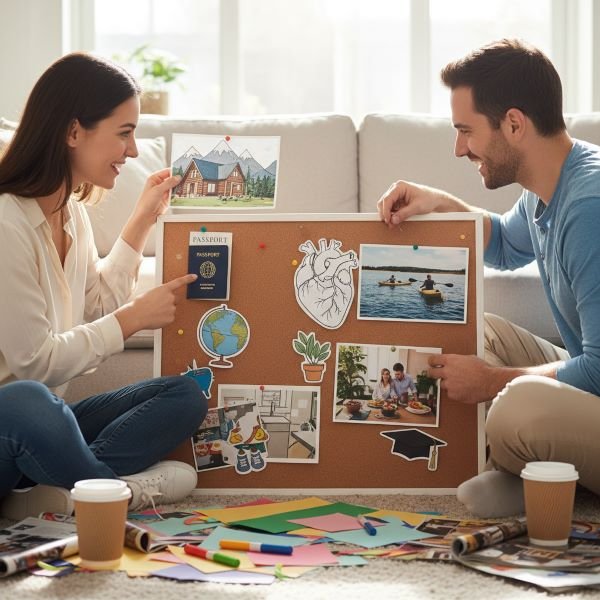
One of the very most significant things I have ever learned about relationships is that love itself is not often enough to make lasting happiness. Attraction, chemistry, and an emotional connection are very much important indeed, yet relationships also require direction, shared knowledge, and proactive growth. In lots of relationships couples get so caught up in their daily tasks that they forget to talk about the life they really wish to build side by side. I have personally witnessed just how simple it's for two people to emotionally drift apart when they stop sharing dreams, goals and meaningful conversations. That is why I believe creating a relationship vision board together can become such a highly effective experience for both partners.

When I first got the idea of relationship vision boards, I assumed they were simply about collecting beautiful pictures and a few romantic notions. But after exploring the concept a bit more deeply I really saw that a vision board is actually all about communication, emotional connection and creating a shared objective. It lets both people show their dreams, values, goals, and expectations visually and emotionally quite well. Even more importantly, it sets up a very safe and inspiring space where couples can talk about the kind of relationship they truly wish to build together. In this article, I intend to explore exactly how creating a relationship vision board together can strengthen our emotional intimacy, improve our communication, and help couples remain connected whilst growing toward a shared future.

Strategies for Handling Ghosting with Grace

Strategies for Handling Ghosting with Grace

At a certain point in my dating life, I experienced something I didn't really grasp at first - ghosting. Everything appeared to be going fine indeed. Conversations flowed smoothly, there was quite a lot of common ground, and then all of a sudden... nothing. No explanation, no closure whatsoever, simply complete silence. Initially, I sort of took it very personally indeed. I questioned everything I'd said, what I might have done all wrong, and whether I had unknowingly triggered it. That state of not knowing was really often harder than even a direct 'no' would have been.

Over time I really started to view ghosting through a different set of eyes. Although it's always somewhat uncomfortable I realized that how I respond to it is way more important than the act itself. Ghosting doesn't define my value, yet my response to it may actually shape both my mind and my subsequent experiences. Learning to cope with ghosting with lots of poise became a quite important part of my ongoing personal development process indeed.

The Role of Forgiveness in Long-Term Relationships

The Role of Forgiveness in Long-Term Relationships

When I initially considered relationships, I thought strong ones would be based on compatibility, communication, and shared values. And although all of those aspects are very crucial indeed, I eventually discovered that there's another aspect that quietly holds everything together over time - forgiveness itself. At the start of a relationship, almost everything seems very smooth indeed. There's quite a lot of excitement, a great deal of understanding, and a rather natural desire to make things work out well. However, as time goes by, differences really do appear, mistakes occur, and miscommunications become absolutely inevitable. That's when forgiveness begins to play a much deeper part than I had ever really anticipated.

Initially, I totally misinterpreted forgiveness. I thought it simply meant letting things go or pretending that something didn't have any effect on me whatsoever. Yet through my own experiences, I came to understand that true forgiveness is much more complex - and a lot more significant - than that. It's not about overlooking problems - it's about acknowledging them, grasping their significance, and deciding to progress onwards without building up a lot of resentment. In long-term relationships, forgiveness gradually becomes less of a single event itself and much more an ongoing process. It influences just how conflicts are settled, how trust is rebuilt and how the relationship does keep growing despite various obstacles. Eventually, I discovered that without forgiveness, even the most robust relationships could seriously struggle to survive itself.

Recognizing Signs That You’re Not Ready to Date

Recognizing Signs That You’re Not Ready to Date

There was a time in my life when I thought that being single necessarily meant I should be dating all the time. It felt like the completely natural next step – meet someone, start building a connection, and then move forward. I didn't really ever ask myself whether I was really ready for it though. Instead I pretty much just went along with what I thought others expected of me hoping that readiness would sort of catch up eventually. Yet over time, I started to see some patterns in my experiences. Some dates felt super forced, while others' connections didn't develop, and in certain moments, I felt really emotionally disconnected - even when I tried engaging.

That's when I really started to grasp something very key: being available to go on dates is totally different from being ready to go on them. Readiness is a lot deeper – it involves having a clear sense of one's emotions, knowing oneself extremely well, and also the ability to really, truly connect with another human being. Without those things, dating can often feel puzzling, exhausting, or even quite frustrating indeed. Realizing when you're not ready isn't a failure at all – it's actually a real sign of self-respect itself. It lets you take a step back, get to know yourself even better, and get set up for much healthier connections later on. Learning to notice these signs greatly helped me approach dating with a whole lot more purpose and clarity.

Building Strong Relationships With Your Partner’s Friends

Building Strong Relationships With Your Partner’s Friends

When I initially started a committed partnership, I considered the most significant bond I really needed to build to be with my partner - and although that's very true indeed, I soon came to realize there was another layer frequently overlooked: your partner's friends themselves. Initially, I paid little attention to this aspect at all. I assumed as long as my relationship with my partner was robust, everything else would naturally slot into place. Yet over time, I began to notice the considerable impact friendships could have on a relationship itself. Friends are generally part of your partner's background, their support network, and their everyday life.

As I started spending even more time around my partner's friends, I realized that building a positive relationship with them wasn't really about trying to impress anybody - it's actually about comprehension and respect. These individuals often know your partner in ways you're still getting to know quite well yourself. Rather than viewing them as outsiders, I began to perceive them as part of the larger picture of my partner's life itself. When I approached these relationships with an open mind instead of a lot of hesitation, everything changed. The dynamic became considerably more relaxed, interactions seemed much more natural, and it created a feeling of harmony that actually strengthened the relationship overall ever so much.

Using Shared Hobbies to Build Chemistry on a Date

Using Shared Hobbies to Build Chemistry on a Date

When I began dating, I really thought that chemistry was either something that appeared instantly - or didn't exist whatsoever. I believed it was all about attraction, having good conversations, and that very first spark people often talk about. And while those things are important, I finally understood that chemistry isn't always something that just happens - it's something that you can build over time. Many of the most unforgettable and meaningful connections I've had didn't result from perfect conversations - but from shared activities that let each of us really relax and have fun together.

That's where discovering hobbies truly transformed my perspective entirely. Rather than concentrating on what to say or attempting to impress someone, I started focusing on what we could do together. It might be something simple - going for a walk, trying out a new thing, or checking out a hobby we had in common - those shared activities produced a very natural connection. I observed that when we were engaged in something really enjoyable, the pressure really dissipated. Conversations flowed a lot more easily, laughter came quite naturally, and the whole atmosphere felt much more authentic. By using shared activities on a date isn't just about filling time - it's about creating a setting where chemistry can develop naturally.

Handling Surprises: The Art of Managing the Unexpected in Relationships

Handling Surprises: The Art of Managing the Unexpected in Relationships

The most significant lesson I have gathered on relationships in recent times is that despite thorough planning, life will still present unexpected moments. In the past I was convinced that stability signified predictability, assuming if everything followed the set plan then the relationship would automatically remain strong. Reality was far from this assumption though. The unexpected situations whether emotional responses, changing circumstances, false impressions or sudden challenges were not exceptions but part of the relationship itself. It is our reaction towards these unexpected events that really matters most than the events themselves.

Initially I didn't cope well with the unexpected turns. I reacted emotionally tried to control things or felt annoyed when my expectations were not met. Over time nevertheless I came to see that relationships demand a certain degree of flexibility, patience and emotional intelligence. It is worth noting that not all surprises carry negative value they can give room for growth deepen your bond together and present new viewpoints too. Instead of considering surprises as interruptions I started viewing them as chances to increase communication trust and mutual comprehension between spouses.

How to Keep Your Dating Life Private from Social Media

How to Keep Your Dating Life Private from Social Media

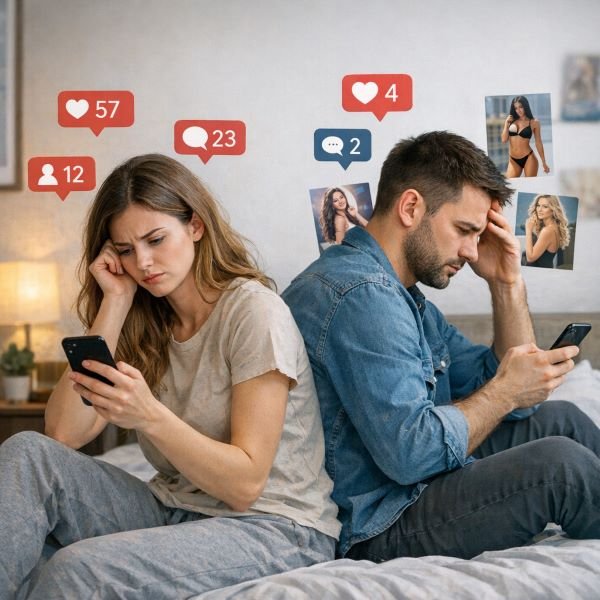
At some point in my life, I really didn't think twice before sharing aspects of my personal life online. Social media had truly become an essential part of our day-to-day communication - so posting updates, photos, or experiences actually seemed almost automatic. Whenever I started dating someone new, my initial thought was to share the excitement - photos together, hints about the relationship, or sometimes very subtle hints that others might catch. It really did seem quite harmless back then, like a great way to celebrate something special. However over time, I really started noticing that the more I shared, the more problems developed.

I started realizing that relationships do require their own space to really grow without constant outside input. When too much of our dating life is shared online, it really opens the door to people's opinions, assumptions, and sometimes even completely unnecessary pressure. What initially began as a very private connection between just two people slowly starts to become something people observe, analyze, and sometimes judge. That change really made me reassess how I approach social media. I learned that maintaining your privacy doesn't really mean keeping your relationship hidden - it means really protecting it. By keeping a lot of my dating life offline, I could concentrate more on building my connection itself rather than showing it off to everyone else.

Tips for Creating Personal Space in Shared Living Arrangements

Tips for Creating Personal Space in Shared Living Arrangements

Living with a person you care about is one of the best experiences in a relationship. I have discovered that sharing a house provides opportunities for closer connection, effective communication and feeling of unity that is difficult to emulate elsewhere. Commonly performed daily activities become shared experiences– cooking meals together, resting after a long day, or just spending calm moments in the same area. Initially, this nearness may feel thrilling and consoling, just as if everything is falling into its right place. One gets to spend more time together, learn each other's habits, and construct a life side-by-side.

However over time I came to realize an important thing: permanent closeness can also present some problems if personal space is not respected. Without having enough room to breathe even healthy connections can turn out too much. Little frustrations become larger, tolerance can wear off, and individuality can begin to fade away. I realized that personal area is not about separating from the partner; it is about striking a balance. It lets both individuals to restore their strength, reflect on themselves, and maintain their sense of self. As soon as I understood this I could see that making personal area within common dwelling is not a sign of relationship weakness– it is really a sign of strength and emotional sensitivity.